 Pin
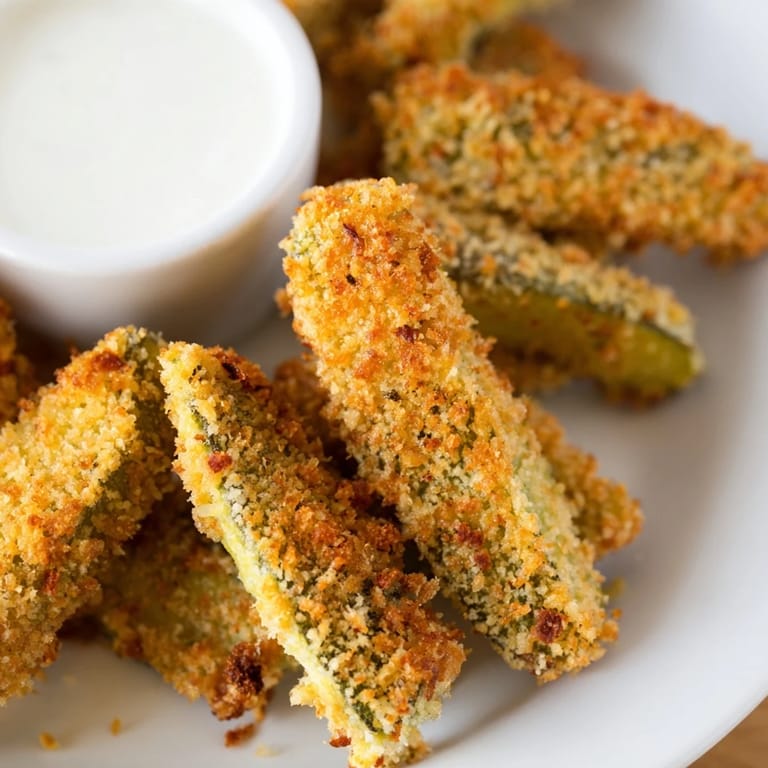
Pin My friend Sarah ordered fried pickles at a dive bar during college and I thought she had lost her mind. One crunch later and I was completely converted to the hot pickle club. Now I make them whenever friends come over because they vanish faster than I can fry them. That tangy crunch against the cool ranch is just something magical.
Super Bowl Sunday a few years back I made three batches back to back and still ran out. My brother kept hovering near the stove snatching them straight from the paper towels. Now I double the recipe minimum because people lose all self control around these things.
Ingredients
- Dill pickle spears: Large thick cut spears hold up better to frying than chips and give you that satisfying crunch in every bite
- All purpose flour: Creates the base layer that helps the egg wash stick to the slippery pickle surface
- Eggs and milk: Whisked together this wash acts as the glue between flour and crumbs
- Panko breadcrumbs: Extra large flakes create the crunchiest coating but regular works fine too
- Garlic powder and paprika: These spices give the breading depth and that golden color that makes them look irresistible
- Cayenne pepper: Just enough heat to make things interesting without overwhelming the pickle
- Vegetable oil: Neutral flavor lets the pickles shine while reaching the high heat needed for proper frying
- Ranch dressing: The cooling counterpart that balances everything perfectly
Tired of Takeout? 🥡
Get 10 meals you can make faster than delivery arrives. Seriously.
One email. No spam. Unsubscribe anytime.
Instructions
- Get the oil ready:
- Pour enough vegetable oil into your deep fryer or heavy pot to reach about 2 inches up the sides. Heat it to 350°F and clip on your thermometer if you have one.
- Set up your breading station:
- Arrange three shallow bowls in a line. Put flour in the first one whisk eggs with milk in the second and mix breadcrumbs with all your spices in the third.
- Dredge each pickle spear:
- Roll pickles through flour first shaking off any extra. Dip them into the egg wash then press them firmly into the spiced breadcrumbs.
- Drain and serve:
- Lift them out with a slotted spoon and let them rest on paper towels. Get them to the table fast while they are still hot and ridiculously crunchy.
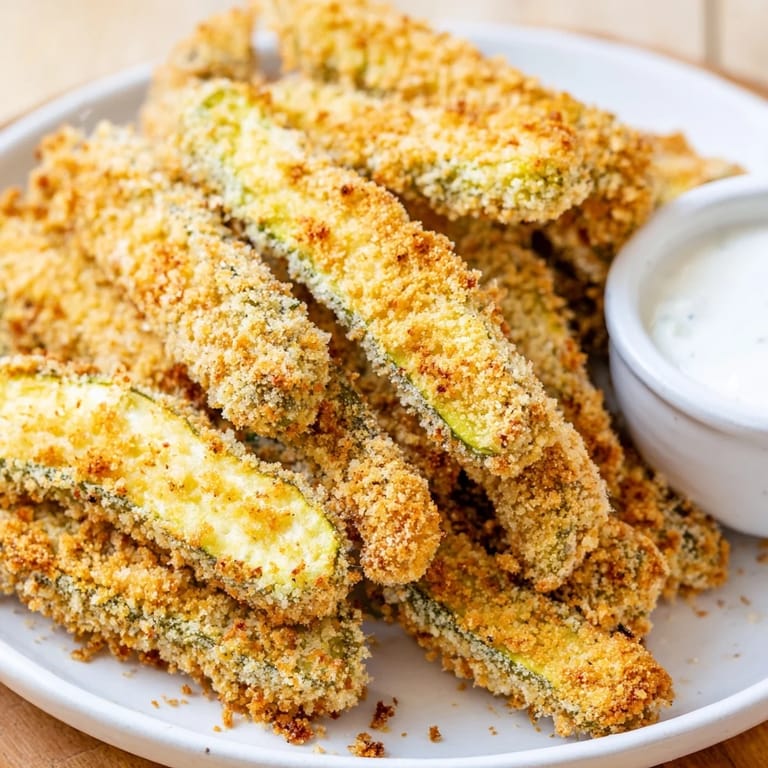 Pin
Pin These have become my go to when I need something that makes people happy instantly. Last summer my neighbor smelled them frying through an open window and showed up with a plate of cookies asking for the recipe.
Getting the Right Crunch
Panko breadcrumbs make a huge difference here because their large flakes create air pockets that turn incredibly crispy. Regular breadcrumbs still give you good results just maybe not that restaurant level crunch. The key is pressing the crumbs onto the pickles firmly so they really adhere.
Oil Temperature Matters
If your oil is too cold the breading gets greasy and heavy. Too hot and they burn before the pickle heats through. 350°F is the sweet spot where everything happens perfectly. I keep a thermometer clipped to the pot because guessing never works as well.
Make Ahead Strategy
You can bread all the pickles ahead of time and arrange them on a baking sheet in the fridge. Fry them just before serving so they stay crispy. Never fry ahead and reheat or you lose that magical texture completely.
- Serve them within minutes of frying for the best experience
- Keep ranch dressing chilled until the moment you need it
- Have extra napkins ready because fingers get messy
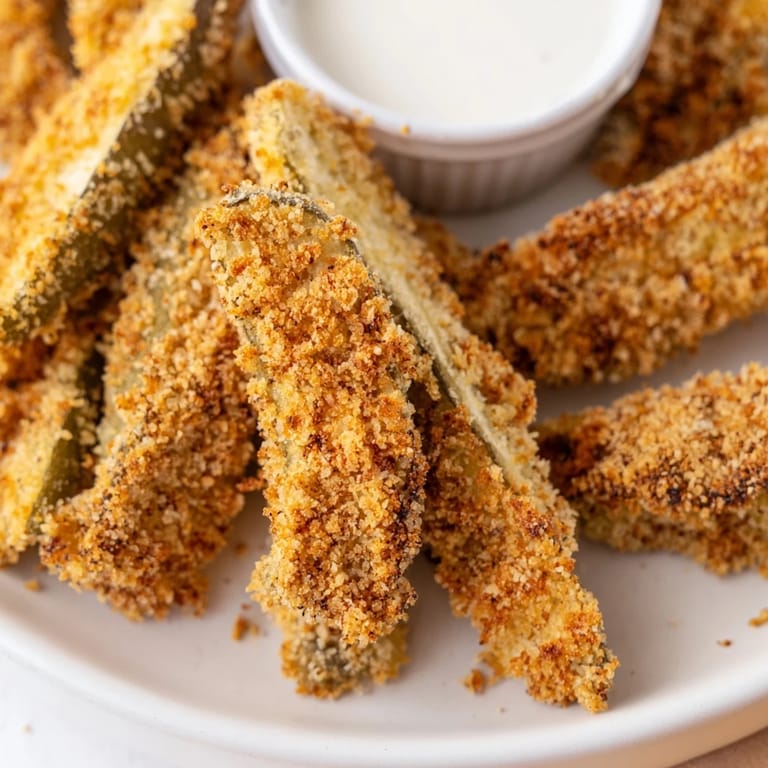 Pin
Pin Every time I make these someone asks why fried pickles are not served at every restaurant. Once you taste that first bite you will wonder the same thing.
Recipe FAQs
- → What type of pickles work best for frying?
Dill pickle spears are ideal for frying. Look for large, firm spears that hold their shape during the breading process. Drain and pat them completely dry before breading—excess moisture prevents the coating from sticking properly and makes the pickles soggy instead of crispy.
- → How do I get extra crispy fried pickles?
Use panko breadcrumbs instead of regular ones for lighter, crunchier texture. Make sure your oil reaches 350°F before frying—too cool and they absorb excess grease, too hot and they burn outside before cooking through. Don't overcrowd the fryer, which drops oil temperature. Drain on paper towels immediately to maintain crispiness.
- → Can I make fried pickles ahead of time?
Fried pickles taste best immediately after frying while the coating is crispy and the inside remains cool and tangy. However, you can prep everything in advance: bread the pickle spears, arrange them on a baking sheet, and refrigerate for up to 2 hours before frying. Do not freeze breaded pickles—the texture becomes soggy.
- → What dipping sauces pair well with fried pickles?
Cool ranch dressing is the classic choice, providing creamy contrast to the hot, crispy exterior. Spicy ranch or chipotle mayo adds heat, while blue cheese dressing offers tangy richness. For something different, try honey mustard, garlic aioli, or even a simple mixture of mayo and ketchup. The cool, creamy element really balances the seasoned breading.
- → Can I bake these instead of deep frying?
Yes, though the texture differs from traditional fried pickles. Arrange breaded spears on a baking sheet coated with cooking spray. Bake at 425°F for 15-20 minutes, flipping halfway through, until golden and crispy. The result is lighter but less crunchy than deep-fried versions. For better texture, try air frying at 375°F for 10-12 minutes.
- → How do I make gluten-free fried pickles?
Substitute gluten-free all-purpose flour blend for regular flour in the dredging step. Use certified gluten-free breadcrumbs or crushed gluten-free crackers for the coating. Ensure your ranch dressing is also gluten-free—many commercial brands contain gluten-derived thickeners. The frying process remains the same, and the taste is virtually identical.