 Pin
Pin There's something almost magical about celeriac that most people overlook—I discovered this root vegetable hiding under the cabbage at a farmers market one October, and the vendor mentioned it was perfect roasted. That single conversation led me to experiment with it in soup, and when I roasted those cubes until their edges turned golden, the earthy aroma filling my kitchen felt like unlocking a secret. The velvety texture once blended surprised me more than the flavor itself, and adding that crispy hazelnut crumble on top transformed what could have been predictable into something people actually ask me to make again.
I made this soup on a Sunday afternoon when my partner surprised me by bringing home fresh hazelnuts from a market he'd stumbled into, and suddenly I had the missing piece to an idea I'd been turning over in my head for weeks. Watching him crack one open and taste it raw, then later seeing his expression when he tasted the finished soup—that moment of quiet satisfaction—reminded me why I cook in the first place. It wasn't about impressing anyone; it was about creating something warm and unexpected together.
Ingredients
- Celeriac (about 700g): This is your star ingredient, and roasting it first builds flavor depth that raw celeriac simply can't offer—I learned this the hard way after trying to skip that step once.
- Potato (150g): Don't skip the potato; it adds natural body to the soup and helps you use less cream while maintaining that silky texture.
- Vegetable broth (900ml): Quality matters here since there aren't many ingredients to hide behind—a homemade broth makes the difference, but a good store-bought one works fine too.
- Hazelnuts (70g): Toasting them yourself in a dry skillet releases their oils and transforms them from pleasant to absolutely essential; pre-toasted ones lose something in the package.
- Heavy cream or plant-based alternative (100ml): This is optional, but it softens the earthiness beautifully—if you skip it, add an extra splash of broth to keep the texture velvety.
- Olive oil (2 tbsp total): Using good olive oil for roasting and sautéing pays dividends in flavor, so don't reach for the cheapest bottle.
- Garlic (2 cloves), onion (1 medium), salt, and white pepper: These are your supporting cast, doing the foundational work that makes the celeriac sing without announcing themselves.
Tired of Takeout? 🥡
Get 10 meals you can make faster than delivery arrives. Seriously.
One email. No spam. Unsubscribe anytime.
Instructions
- Get your oven ready and prep the celeriac:
- Preheat to 200°C and toss your celeriac cubes with olive oil, salt, and pepper until they're well coated. Spread them on a baking tray with space between pieces—this is when you start smelling what's to come, and trust me, that aroma is your signal the oven is working its magic.
- Roast until golden and tender:
- Roast for 25 to 30 minutes, turning halfway through so they caramelize evenly on all sides. You're looking for soft insides and golden edges—this takes patience, but it's where all the flavor develops.
- Build your base while the oven works:
- Heat olive oil in a large pot over medium heat and sauté the chopped onion for about 4 minutes until it turns translucent and softens. Add your minced garlic and diced potato, stirring for another 2 minutes until the garlic's raw bite mellows slightly.
- Toast the hazelnuts for crumble:
- In a separate skillet over medium heat, dry toast your chopped hazelnuts for 3 to 4 minutes, stirring occasionally—you'll hear them start to crack slightly and smell something wonderfully toasted. Add butter and a pinch of sea salt, tossing until they're glossy and golden, then set aside to cool.
- Combine everything and simmer:
- Transfer your roasted celeriac to the pot with the onion and potato mixture, pour in the vegetable broth, and bring to a gentle boil. Reduce heat and simmer for 15 to 20 minutes until all the vegetables are so soft they practically melt—this is when the kitchen smells purely of comfort.
- Blend until silky smooth:
- Using an immersion blender, puree the soup until there are no lumps and the color is a pale, uniform cream. If you're using a countertop blender, work in batches and be careful with the hot liquid—patience here prevents kitchen disasters.
- Finish with cream and seasoning:
- Stir in the heavy cream or plant-based alternative if using, then taste carefully and adjust salt and white pepper to your preference. Sometimes it needs nothing more; sometimes a whisper of salt brings everything into focus.
- Serve with crumble and garnish:
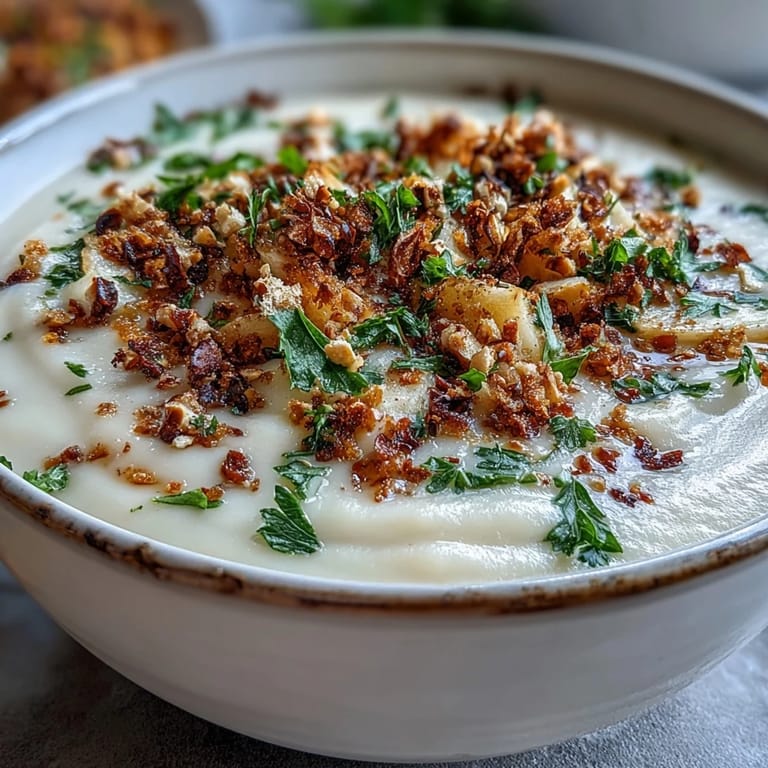
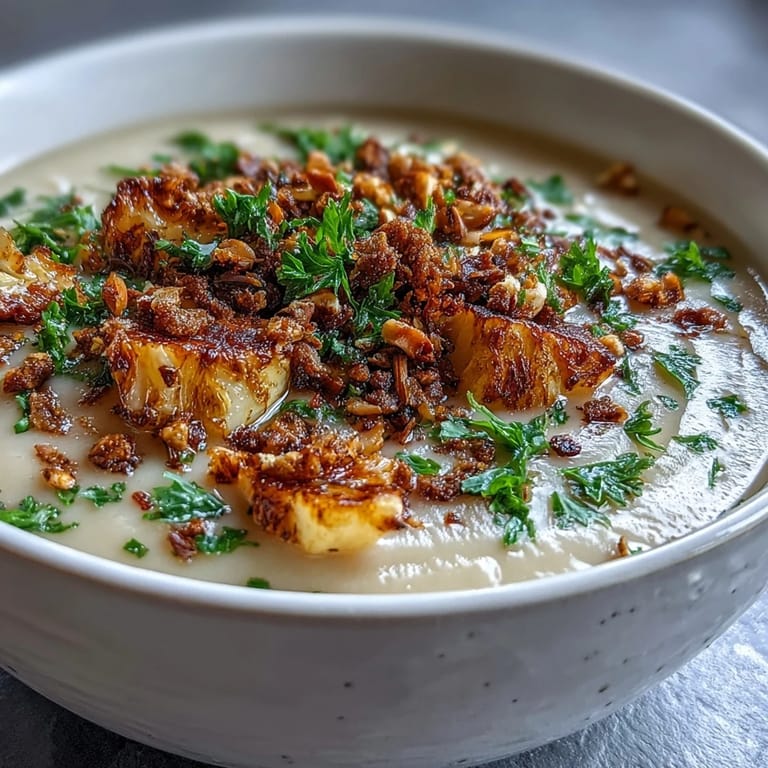
- Ladle the soup into bowls and crown each one with a generous handful of your hazelnut crumble and a sprinkle of fresh parsley. This is when the dish finally comes together—textural contrast meeting earthy warmth.
 Pin
Pin This soup became something of a tradition after that first Sunday, and now when the weather turns crisp, friends know they might receive a text asking if they're free for lunch. There's something about offering someone a bowl of this—watching them taste that contrast between silky soup and crispy hazelnuts—that feels like sharing more than just food.
The Secret Life of Celeriac
Celeriac is one of those vegetables that seems intimidating because it looks like it fell from another planet, all knobby and slightly off-putting under those layers of skin. Once you peel past the exterior though, the flesh inside is pale and mild, ready to absorb flavors around it like a sponge. Roasting unlocks something deeper—the sugars in the vegetable caramelize, and suddenly you understand why chefs keep coming back to it. I used to avoid it at the market, but now I seek it out, especially in the months when root vegetables start appearing regularly.
Texture and Temperature Matter
The moment the hazelnut crumble hits the hot soup, there's a brief window where you get both temperatures and textures playing against each other—warm, smooth against cool, crisp. This contrast is actually why the dish works; without it, you'd simply have a pleasant but unremarkable soup. I learned this lesson when I made the crumble in advance and let it sit in the fridge, then warmed it in the oven before serving—it became soft again, and somehow the whole dish lost its personality. Now I make the crumble as close to serving time as possible, and I notice people eating it more slowly, paying attention to what's in their bowl.
Variations and When to Try Them
Once you've made this soup a few times, you start seeing possibilities everywhere—a touch of fresh thyme stirred in at the end, a squeeze of lemon to brighten the earthiness, or even a whisper of ground nutmeg if you're feeling adventurous. I've found that the soup's simplicity means it accepts these additions gracefully without falling apart, and sometimes the best version is the one you discover by accident while cooking. The only rule I'd suggest: don't overcomplicate it, because the celeriac and hazelnut pairing is doing most of the work already.
- A dry white wine like Pinot Gris pairs beautifully alongside the soup, echoing its subtle, mineral notes.
- Fresh parsley on top adds a bright, peppery finish that cuts through the richness perfectly.
- If you want extra depth without dairy, a splash of good quality vegetable broth can replace the cream while keeping the texture creamy.
 Pin
Pin This soup reminds me that the best recipes aren't always the most complicated—sometimes they're just about choosing good ingredients and giving them the respect they deserve. When people ask for the recipe, I never just hand them the ingredient list; I always mention the roasting step first, because that's where the magic actually starts.
Recipe FAQs
- → Can I make this soup ahead of time?
Absolutely. The soup actually develops deeper flavors when made 1-2 days ahead. Store in an airtight container in the refrigerator and reheat gently on the stove, adding a splash of broth if needed. Prepare the hazelnut crumble fresh and add just before serving.
- → Is celeriac the same as celery?
Not exactly. Celeriac is a variety of celery grown specifically for its large, knobby root rather than its stalks. It has a dense, creamy flesh with a mild celery flavor that becomes sweet and nutty when roasted. It's often called celery root in recipes.
- → What can I substitute for hazelnuts?
Walnuts, pecans, or toasted almond slivers work beautifully as alternatives. Each brings a slightly different nutty profile but still provides that essential crunchy contrast to the smooth soup. Pumpkin seeds (pepitas) make an excellent nut-free option.
- → How do I achieve the smoothest texture?
Roasting the celeriac first is key—it softens the flesh more effectively than boiling. Use a high-speed blender or immersion blender and purée for 2-3 minutes until completely silky. If any fibrous pieces remain, strain through a fine-mesh sieve for restaurant-quality smoothness.
- → Can I freeze this soup?
Yes, freeze the cooled soup without cream in freezer-safe containers for up to 3 months. Thaw overnight in the refrigerator and reheat gently. Add cream (if using) after reheating, as dairy can separate when frozen and thawed. The hazelnut crumble is best made fresh.
- → What wine pairs well with this soup?
A dry white wine with good acidity cuts through the creamy texture beautifully. Pinot Gris, Sauvignon Blanc, or a dry Riesling are excellent choices. For red wine lovers, a light Pinot Noir with low tannins won't overpower the delicate celeriac flavor.