 Pin
Pin The first time I tasted shakshuka was on a cramped kitchen stool in a friend's apartment, watching steam rise from a cast-iron skillet while she casually cracked eggs into bubbling tomato sauce like it was the most natural thing in the world. She didn't measure anything, just moved with the confidence of someone who'd eaten this dish a hundred times over breakfast. That moment stuck with me, not because of perfection, but because of how alive the kitchen felt, how the smell of cumin and paprika seemed to tell a story older than any recipe card could. Now, whenever I make it, I'm chasing that same feeling—that sense of being part of something warm and shared.
I remember making this for my neighbor on a Sunday morning when she mentioned offhandedly that she'd never had proper shakshuka. The moment she dipped her pita into that golden egg yolk and tasted the sauce, her whole face changed—not dramatically, just quietly, like she'd found something she didn't know she was missing. We ended up sitting at the kitchen counter for two hours afterward, talking about food and memory and why certain dishes matter.
Ingredients
- 1 large onion, finely chopped: This is your foundation; take time with it because the sweetness that develops during cooking anchors the entire dish.
- 1 red bell pepper and 1 yellow bell pepper, diced: The combination gives you both sweetness and a slight earthiness that transforms as they soften in the heat.
- 3 garlic cloves, minced: Don't skip this step or rush it; the aroma matters as much as the flavor.
- 2 cups baby spinach (optional): If you include it, add it just before the eggs so it wilts gently without falling apart.
- 1 jalapeño, seeded and finely chopped (optional): This isn't just about heat; it adds brightness and a subtle grassy note underneath the spice.
- 2 tablespoons olive oil: Use good olive oil here because it's one of the few things you'll really taste; it carries the warmth of the spices.
- 1 teaspoon ground cumin, 1 teaspoon paprika, ½ teaspoon ground coriander: These spices work like a conversation, each one bringing its own voice to the sauce.
- ¼ teaspoon cayenne pepper (optional): Add this if you want the heat to linger rather than shout.
- 1 (28-ounce) can crushed tomatoes: Use a quality brand if you can; the tomatoes are the voice of this dish.
- 1 teaspoon sugar: This balances acidity in the tomatoes without making anything taste sweet.
- Salt and black pepper, to taste: Taste as you go; the sauce will need more salt than you might expect.
- 4–6 large eggs: Crack them gently into the wells you've made; they'll cook more evenly if you don't rush this part.
- ¼ cup fresh cilantro or parsley, chopped: Either works, though cilantro adds a brightness that feels authentic to the dish.
- ½ cup crumbled feta cheese (optional): The saltiness cuts through the richness of the yolk beautifully.
- 4 pita breads, warmed: Warm these at the last moment so they're still flexible enough to wrap around the skillet handle or tear into the sauce.
Tired of Takeout? 🥡
Get 10 meals you can make faster than delivery arrives. Seriously.
One email. No spam. Unsubscribe anytime.
Instructions
- Start your base:
- Heat the olive oil in a large skillet over medium heat and add the chopped onion. You're listening for a soft sizzle, not an aggressive pop; after about 3 minutes, the onion should be turning translucent and releasing that sweet smell that tells you something good is beginning.
- Build the vegetables:
- Add the bell peppers and jalapeño if using, stirring occasionally while they soften over the next 5 minutes. The kitchen will start to smell brighter, more complex, like the spices are waiting in the wings.
- Wake up the spices:
- Stir in the garlic, cumin, paprika, coriander, and cayenne, cooking just long enough to hear the spices toast gently. You'll know it's right when the aroma fills your entire face; don't walk away because this moment lasts only about a minute.
- Simmer the sauce:
- Pour in the crushed tomatoes along with the sugar, salt, and pepper. Let this bubble quietly for 10 to 12 minutes, stirring now and then, until the sauce thickens slightly and tastes balanced between bright and savory. Add the spinach now if you're using it, watching as it disappears into the warmth.
- Create wells for the eggs:
- Using the back of your spoon, press small indentations into the sauce scattered around the skillet. These wells are where your eggs will nestle, and they matter more than you'd think because they keep the yolks from sliding into the deepest part of the sauce.
- Cradle the eggs:
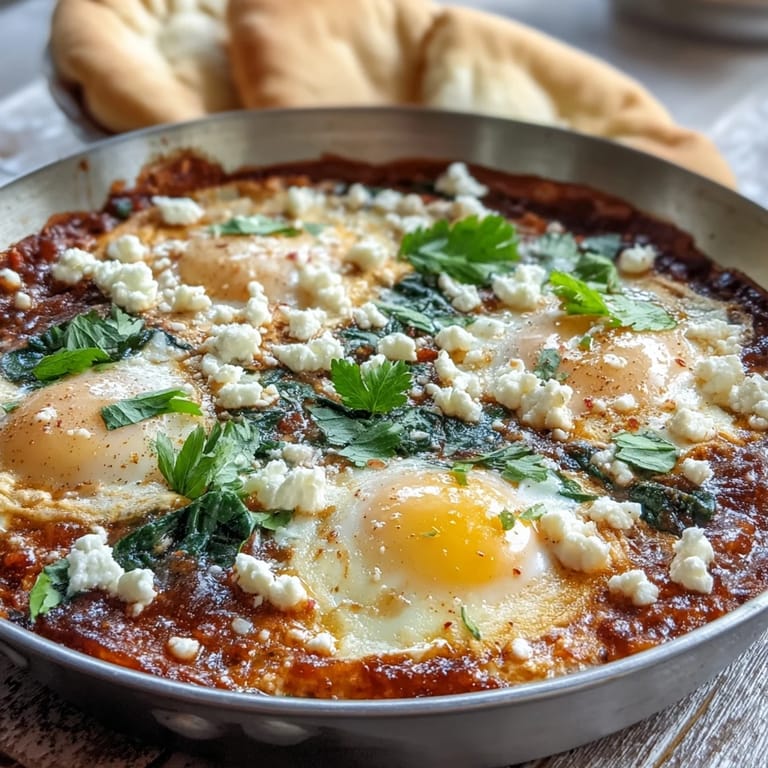
- Crack each egg carefully into its own well, making sure not to break the yolks. Cover the skillet and reduce the heat slightly; the eggs will set from the warmth of the sauce rather than direct heat, which means the yolks stay runny and the whites turn just opaque.
- Test for doneness:
- After 6 to 8 minutes, peek under the lid and give the skillet a gentle nudge; the whites should be set but still jiggly around the yolk. The timing here depends on how hot your skillet runs and how you like your eggs, so trust your instincts over the clock.
- Finish and serve:
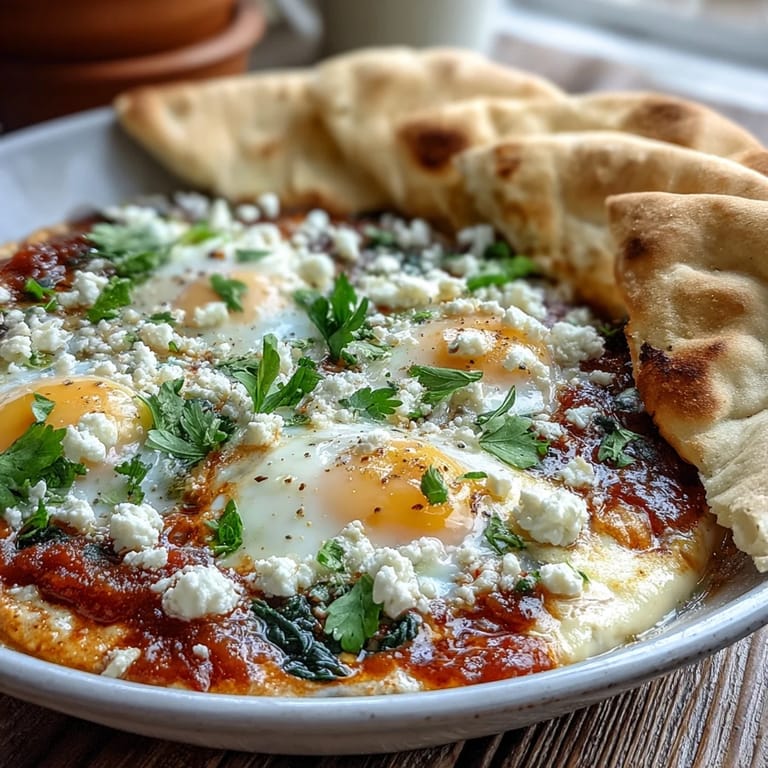
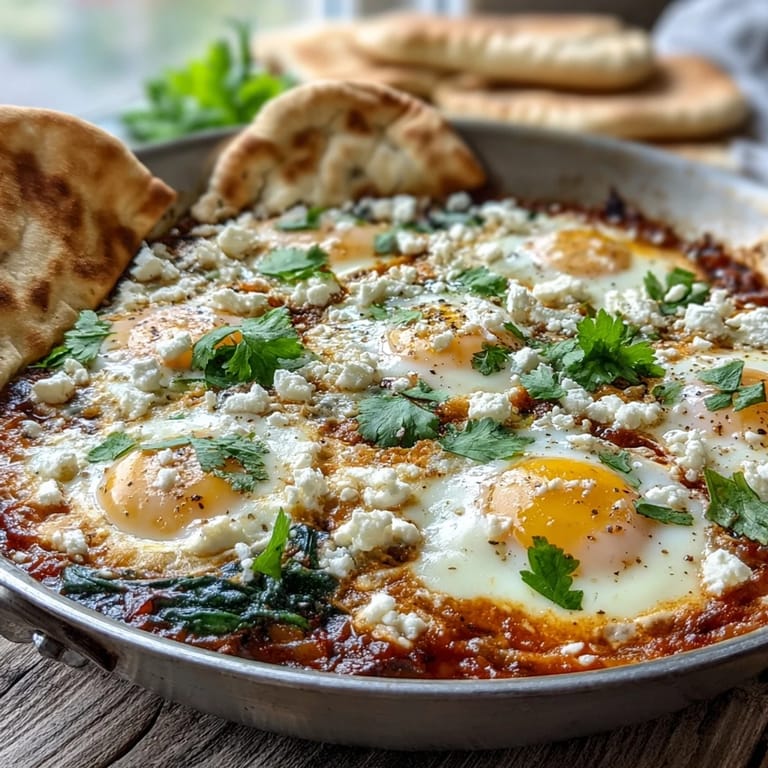
- Remove from heat and shower everything with fresh cilantro or parsley and feta if you're using it. Serve immediately with warm pita bread, watching as people tear into it without thinking about it, just eating.
 Pin
Pin There's something about this dish that turns ordinary moments into small celebrations. My partner and I made this on a quiet Thursday evening, and somehow a simple dinner became this thing where we were both present, both laughing when the first egg yolk broke into the sauce exactly the way we hoped it would.
The Story Behind Shakshuka
Shakshuka has been feeding people across the Middle East and North Africa for centuries, though no one seems to agree on exactly where it originated or which version came first. What everyone agrees on is that it's humble and generous at the same time, the kind of food that adapts to what's available while refusing to apologize for its simplicity. When you eat it, you're tasting something that grandmothers have made in cast-iron skillets for generations, often for breakfast or dinner depending on the day.
When to Make This
Shakshuka works beautifully for breakfast when you want something more interesting than eggs alone, but it's equally perfect for a casual dinner with friends or a solo meal when you want to feel taken care of by your own hands. I've made it on mornings when I woke up restless and needed something to do, and I've made it at night when the day left me wanting warmth and substance. The beauty is that it doesn't judge the hour or the reason; it just shows up and does its job, which is to make you feel present.
Variations and Adjustments
This recipe is more of a foundation than a prescription, which is part of why it has survived so long and traveled so far. I've added roasted red peppers straight from a jar when I didn't have fresh ones, crumbled sausage when I wanted something richer, and kalamata olives when I wanted brine and salt. The spice level is entirely in your hands—go gentle with cayenne if you're cooking for someone heat-averse, or add more if you like the kind of fire that lingers. Some people add a splash of red wine to the sauce, or finish with a dollop of labneh or Greek yogurt, which cools and richens things at the same time.
- For extra protein, stir in cooked chickpeas or crumbled tofu about 5 minutes before adding the eggs.
- If you want to make this ahead, prepare the sauce completely and reheat it gently before cracking in the eggs.
- A pinch of harissa stirred into the sauce transforms it into something with deeper, more complex heat.
 Pin
Pin Shakshuka is the kind of dish that reminds you why we gather around food in the first place—it's neither fancy nor difficult, just honest and generous. Make it tonight, and you'll understand why it keeps showing up on tables across continents.
Recipe FAQs
- → What is shakshuka?
Shakshuka is a popular Middle Eastern and North African dish of eggs poached in a sauce of tomatoes, olive oil, peppers, onion, and garlic. Commonly spiced with cumin, paprika, and cayenne, it's traditionally served for breakfast but enjoyed any time of day.
- → How do I know when the eggs are done?
Cover the skillet and cook for 6-8 minutes. The whites should be completely set and opaque, while the yolks remain slightly jiggly and runny when you gently shake the pan. For firmer yolks, cook an additional 2-3 minutes.
- → Can I make shakshuka ahead of time?
The tomato sauce base can be made up to 2 days in advance and stored in the refrigerator. Reheat gently before adding and poaching the eggs. Fresh eggs should always be added just before serving for the best texture.
- → How can I adjust the spice level?
Control the heat by adjusting the amount of jalapeño and cayenne pepper. Omit both for a mild version, or increase the cayenne to ½ teaspoon for more kick. The paprika and cumin provide flavor without significant heat.