 Pin
Pin My sister called me on a Tuesday afternoon, voice bright with that particular excitement that means she's planning something. She wanted to make pavlova for Mom on Mother's Day, but had never attempted one before—neither had I, actually. We decided to tackle it together, and I'll admit, standing in her kitchen watching egg whites transform into glossy peaks felt like witnessing small magic happen. There's something about meringue that makes you feel like you've cracked a secret code, especially when that first golden-brown nest emerges from the oven. Now whenever I make this, I think of her laugh when we nearly opened the oven door too early and nearly deflated the whole thing.
The first time I actually served this to people was my neighbor's daughter's graduation party, and I was nervous in that way where you pretend you're not nervous. The pavlova sat on the dessert table looking absolutely stunning, and I watched people's faces change when they took that first bite—that moment where the crunchy exterior gives way to that soft, sweet center. One guest asked for the recipe immediately, and I realized I'd found the kind of dessert that makes people feel special just by being offered a slice.
Ingredients
- Egg whites (4 large, room temperature): This is non-negotiable—even a tiny speck of yolk will prevent them from whipping properly, so I've learned to separate eggs one at a time into a small bowl first.
- Superfine sugar (1 cup, 200g): Regular sugar takes longer to dissolve and can make the meringue grainy; superfine really does make a difference in texture.
- Cornstarch (1 tsp): This ingredient seems small but it stabilizes the meringue and helps create that signature crispy-yet-chewy texture that makes pavlova special.
- White vinegar (1 tsp): It sounds odd, but this acidic touch strengthens the egg white foam and adds a subtle flavor layer you won't identify but will somehow taste.
- Pure vanilla extract (1 tsp for meringue, 1 tsp for cream): Real vanilla matters here since meringue can taste a bit plain without it, and cheap vanilla extract can introduce strange flavors.
- Salt (pinch): Just enough to wake up the other flavors without making it taste salty at all.
- Heavy whipping cream (1 cup, 240ml, chilled): Cold cream whips faster and holds its shape longer, so chill your bowl and beaters if you have time.
- Powdered sugar (2 tbsp for cream, 1 tbsp optional for dusting): This dissolves instantly into whipped cream and won't create grittiness like granulated sugar would.
- Mixed berries (4 cups total - strawberries, raspberries, blueberries, blackberries): Use whatever's freshest at your market; the mix of colors matters as much as the flavors do for presentation.
- Fresh mint leaves (1 tbsp, optional): A few green leaves tucked between the berries add an almost elegant touch that makes everything look intentional.
Tired of Takeout? 🥡
Get 10 meals you can make faster than delivery arrives. Seriously.
One email. No spam. Unsubscribe anytime.
Instructions
- Set your oven and prep your stage:
- Preheat to 250°F (120°C) and line your baking sheet with parchment paper, then trace that 9-inch circle—it gives you a visual guide and somehow makes you feel more confident as you shape the meringue. This low temperature is the secret to keeping the inside soft while the outside crisps up.
- Whip your egg whites into pillows of foam:
- In a completely clean, dry bowl (I wipe mine with vinegar to remove any oil residue), beat the egg whites with a pinch of salt until soft peaks form—this takes about 2-3 minutes. Watch as they transform from clear liquid into something that looks almost cloud-like.
- Add sugar gradually and beat until glossy:
- Add the superfine sugar one tablespoon at a time while beating, which takes about 5-6 minutes total—this slow method dissolves the sugar completely and creates that signature glossy, stiff-peaked meringue. If you rush and dump it all in at once, you'll end up with graininess that's impossible to hide.
- Fold in the secret ingredients:
- Gently fold the cornstarch, vinegar, and vanilla extract into the meringue using a spatula, being careful not to deflate all those air bubbles you've worked to create. The folding motion is almost meditative if you let it be.
- Shape your meringue nest:
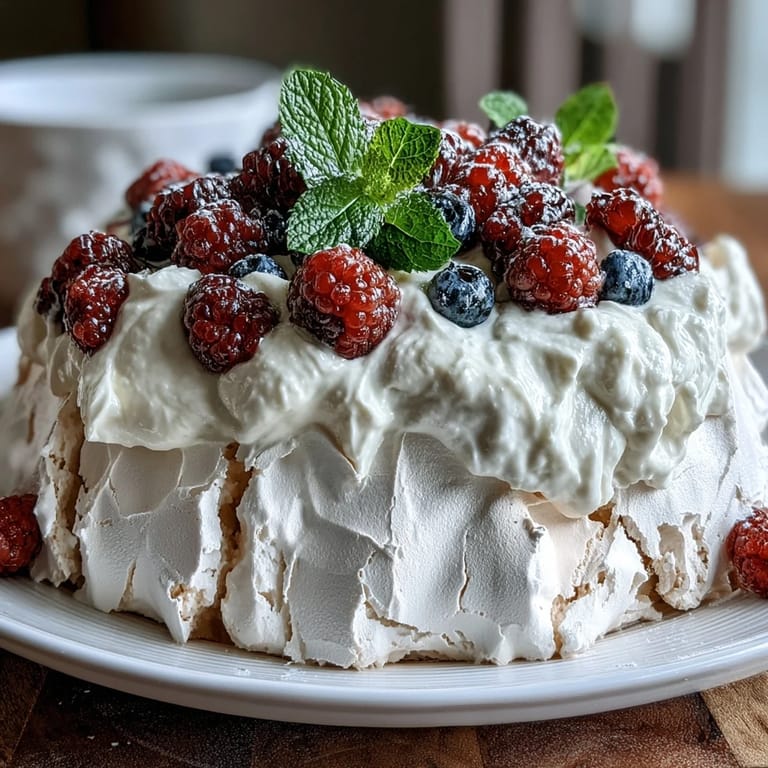
- Spoon the meringue onto your parchment circle, creating a nest shape with slightly raised edges that form little walls—this catches the cream and berries later. I like to use the back of a spoon to gently swirl it slightly, though honest rustic shapes look just as beautiful.
- Bake low and slow, then rest in the residual heat:
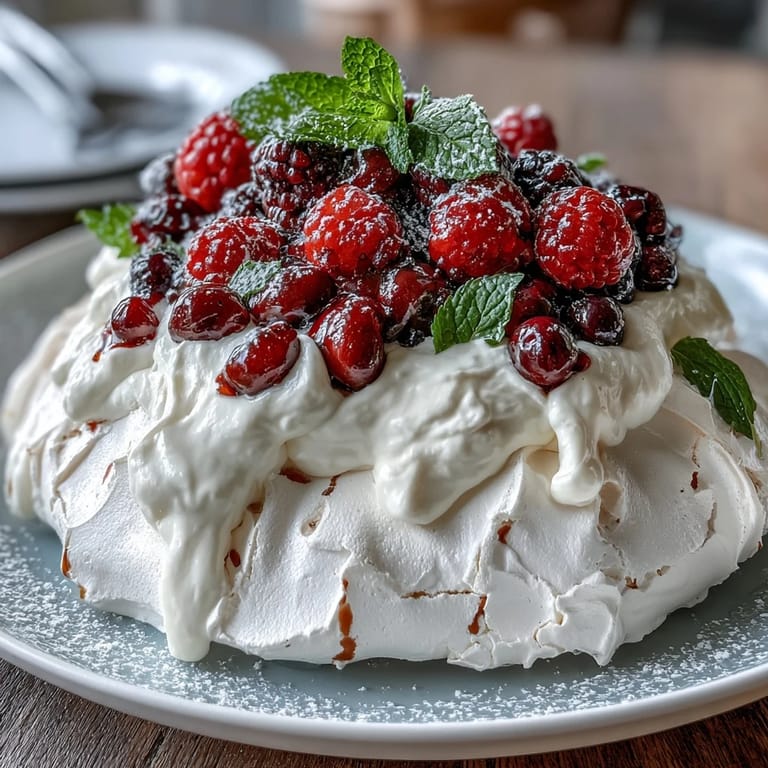
- Bake for 1 hour 15 minutes at that low temperature, then turn off the oven and crack the door open just slightly, leaving the pavlova inside to cool completely. This gradual cooling prevents cracks and keeps the interior pillowy soft.
- Whip your cream while waiting:
- While the pavlova cools, chill your mixing bowl and beaters, then whip the heavy cream with powdered sugar and vanilla until soft peaks form—this takes about 3-4 minutes and smells absolutely divine. Stop before it becomes stiff; soft peaks are forgiving if you need to wait a few minutes.
- Assemble your celebration dessert:
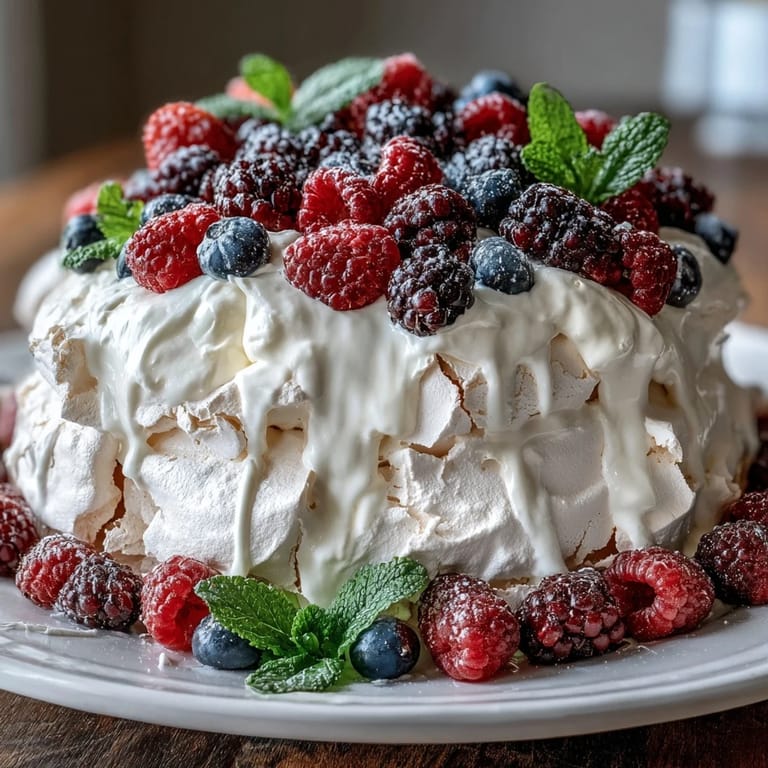
- Once the meringue is completely cool, transfer it gently to your serving platter (it's sturdy but still deserves respect), then dollop with whipped cream and arrange your berries artfully across the top. Add mint leaves if using and dust with powdered sugar just before serving for that fresh, finished look.
 Pin
Pin There's a moment when you pull that golden pavlova from the oven and realize you actually did it—that you created this fragile, beautiful thing with just eggs and air and patience. My mom cried when she saw the one we made her, and honestly, that's when I understood that pavlova isn't really about technique or technique at all. It's about showing up for people with something that required actual thought and care.
The Science Behind the Crunch
Meringue works because of something almost miraculous: when you whip egg whites, you're essentially creating millions of tiny air bubbles surrounded by egg protein. The sugar stabilizes these bubbles, and the cornstarch and vinegar help set them during baking so they hold their shape. The low oven temperature means the outside dries and crisps while the inside stays soft and marshmallowy, creating that texture contrast that makes pavlova so addictive.
Making It Ahead and Storage
The best part about pavlova is that you can bake it the day before, which takes real pressure off Mother's Day morning. Store the unfrosted meringue in an airtight container, and it'll stay crispy for a full day—just assemble it with cream and berries a few hours before serving. If you do it more than a few hours ahead, the moisture from the cream will start softening the meringue, which some people love and others find less ideal.
Flavor Variations and Berry Swaps
Pavlova is genuinely a canvas for whatever fruits are in season where you live. I've made it with fresh peaches and raspberries in summer, with kiwi and strawberries in spring, and even with passion fruit curd drizzled through the cream for a tropical twist. If you want a chocolate version, fold 2 tablespoons of sifted cocoa powder into the meringue before baking, and suddenly you have something completely different but equally stunning. The rules are flexible here—work with what makes your heart happy or what's fresh at your farmers market.
- Try swirling a spoonful of lemon curd into the whipped cream for brightness that cuts through the richness.
- A drizzle of good quality chocolate sauce right before serving adds elegance without changing the structure.
- Fresh edible flowers tucked between berries make this feel fancy enough for any celebration.
 Pin
Pin This recipe has become my go-to celebration dessert because it manages to feel both fancy and approachable, impressive yet forgiving in its own way. Every time I make it, someone asks for the recipe, and I get to share this little moment of kitchen joy.
Recipe FAQs
- → How do I achieve a crisp meringue shell with a soft center?
Beat egg whites until stiff peaks form, fold in cornstarch and vinegar gently, and bake low and slow. Cooling the pavlova in a slightly open oven helps create the perfect texture.
- → Can I substitute the berries with other fruits?
Yes, seasonal fruits like kiwi, peaches, or passionfruit work well to add different flavors and colors.
- → What is the best way to whip the cream for the topping?
Chill the heavy cream before whipping with powdered sugar and vanilla until soft peaks form for a light and fluffy texture.
- → How can humidity affect the pavlova?
High humidity may cause the meringue to soften and lose crispness. It's best to prepare pavlova on a dry day.
- → Is there a way to add a chocolate flavor twist?
Fold 2 tablespoons of sifted cocoa powder into the meringue mixture before baking to incorporate a subtle chocolate note.