 Pin
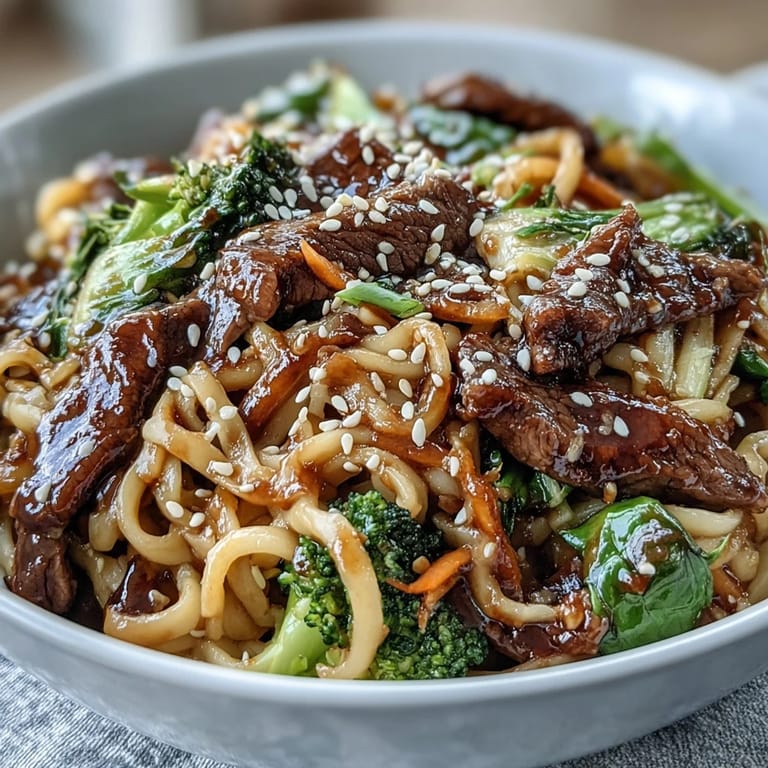
Pin The smell of garlic hitting hot oil always pulls me back to the first weeknight I decided to skip takeout and throw together this skillet of Korean-inspired noodles. I had flank steak thawing on the counter, a tangle of rice noodles in the pantry, and a craving I couldn't name. By the time the beef sizzled and the soy-brown sugar sauce turned glossy, my kitchen smelled better than any restaurant. I've made this dish dozens of times since, tweaking the vegetables and adjusting the heat, but that first bowl remains the benchmark.
I cooked this for a friend who swore she didn't like beef, and she went back for seconds before I even sat down. She said the trick was slicing the flank steak thin enough that it stayed tender, not chewy. I've learned that lesson the hard way more than once. Now I always freeze the steak for fifteen minutes before slicing, and the knife glides right through. That night, we sat at my tiny kitchen table with mismatched bowls, twirling noodles and laughing about how much better homemade tastes when you're not rushing.
Ingredients
- Rice noodles: These turn silky and slippery when cooked, soaking up the sauce without getting mushy if you rinse them in cold water after draining.
- Flank steak: Slicing against the grain is the secret to tender bites, and a brief stint in the freezer makes the job easier.
- Broccoli florets: They add crunch and soak up the garlic-ginger aromatics beautifully, but don't overcook them or they'll turn gray and sad.
- Bell pepper: Red or yellow peppers bring sweetness and color, and they stay crisp even after a hot stir-fry.
- Carrot: Julienned carrots cook quickly and add a subtle earthiness that balances the soy and sugar.
- Green onions: Chopped fresh at the end, they give a sharp, bright finish that cuts through the richness.
- Garlic and ginger: These aromatics bloom in hot oil and perfume the entire dish, so mince them fine and don't let them burn.
- Soy sauce: The salty backbone of the sauce, and a good quality one makes a noticeable difference.
- Brown sugar: It melts into the soy sauce and creates a glossy, slightly caramelized coating.
- Sesame oil: A few drops go a long way, adding a nutty depth that ties everything together.
- Vegetable oil: High smoke point means you can crank the heat without setting off the smoke alarm.
- Sesame seeds: Toasted seeds sprinkled on top add a delicate crunch and visual appeal.
Tired of Takeout? 🥡
Get 10 meals you can make faster than delivery arrives. Seriously.
One email. No spam. Unsubscribe anytime.
Instructions
- Soften the noodles:
- Cook the rice noodles according to package directions, then drain and rinse them under cold water to stop the cooking. This keeps them from turning gummy when you toss them in the skillet later.
- Heat the skillet:
- Pour vegetable oil into a large skillet or wok and set it over medium-high heat until it shimmers. A hot pan means a proper sear on the beef.
- Sear the beef:
- Add the thinly sliced flank steak in a single layer and let it sizzle for two to three minutes, flipping once, until browned. Transfer the beef to a plate and don't worry about cooking it through, it will finish later.
- Bloom the aromatics:
- Toss minced garlic and grated ginger into the same skillet and stir for thirty seconds until the air smells sweet and sharp. Watch closely so they don't scorch.
- Stir-fry the vegetables:
- Add broccoli, bell pepper, and carrot to the hot skillet and stir-fry for about five minutes, tossing frequently. They should stay tender-crisp with a little char on the edges.
- Mix the sauce:
- While the vegetables cook, whisk together soy sauce, brown sugar, and sesame oil in a small bowl until the sugar dissolves completely. The sauce will look thin but will cling beautifully once heated.
- Reunite beef and sauce:
- Return the beef to the skillet and pour the sauce over everything, stirring to coat. The beef will finish cooking in the sauce and the flavors will meld in seconds.
- Toss in the noodles:
- Add the cooked rice noodles to the skillet and gently toss everything together with tongs until the noodles are evenly coated and warmed through, about two minutes. Be gentle so the noodles don't break.
- Garnish and serve:
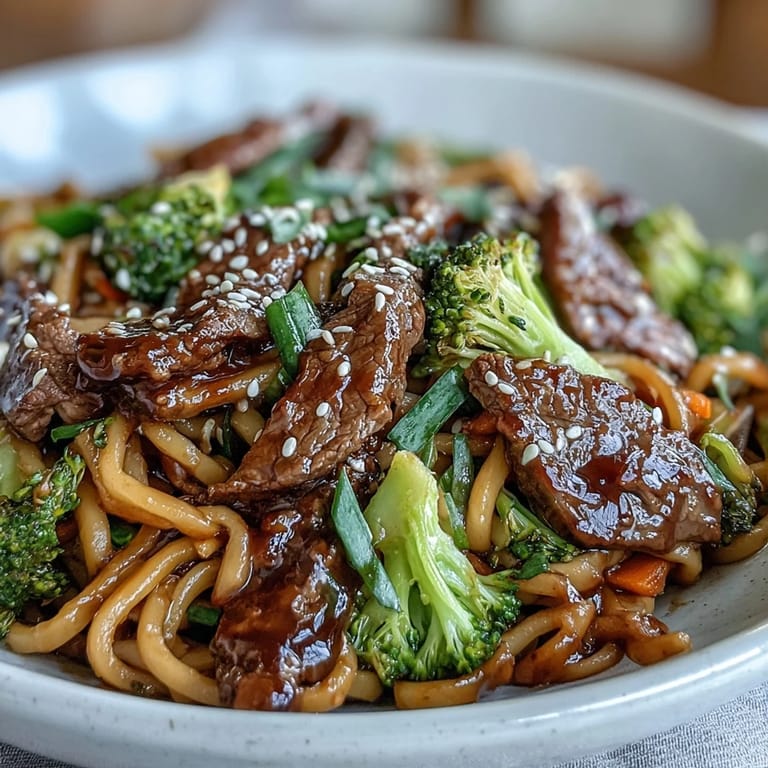
- Sprinkle chopped green onions and sesame seeds over the top before serving. The fresh garnish adds brightness and a pop of color to each bowl.
 Pin
Pin One Sunday afternoon, I made a double batch of this for a potluck, and it disappeared before the host even set out plates. Someone asked if I'd been to culinary school, and I laughed because I'd only learned to julienne carrots the week before. The truth is, this dish looks and tastes far more impressive than the effort it requires. It's become my go-to whenever I want to feel competent in the kitchen without spiraling into a three-hour project.
Swapping Proteins and Vegetables
Flank steak is my favorite here, but I've swapped in chicken thighs, pork tenderloin, and even firm tofu with great results. The key is cutting everything into similar-sized pieces so they cook at the same rate. If you go with tofu, press it well and toss it in a little cornstarch before pan-frying to get a crispy edge. Snap peas, zucchini, and mushrooms all work beautifully in place of or alongside the broccoli and bell pepper, so raid your crisper drawer with confidence.
Adjusting the Heat Level
This recipe is mild by default, but I like to stir a spoonful of gochujang into the sauce when I'm craving heat. Sriracha works too, though it's sharper and less complex. Start with a teaspoon, taste, and add more if you want your lips to tingle. My partner prefers it fiery, so I divide the noodles and doctor half the batch with extra chili paste. It's an easy way to keep everyone at the table happy without making two separate meals.
Storing and Reheating Leftovers
Leftovers keep in an airtight container in the fridge for up to three days, though the noodles will absorb some of the sauce as they sit. When I reheat, I add a splash of water or extra soy sauce to loosen everything up and toss it in a hot skillet for a minute or two. Microwaving works in a pinch, but the noodles can turn rubbery if you overheat them. I've also eaten this cold straight from the fridge on a lazy morning, and it's surprisingly good that way too.
- Freeze individual portions in freezer-safe containers for up to a month and thaw overnight in the fridge.
- If reheating from frozen, let it thaw completely first or the noodles will cook unevenly.
- Garnish with fresh green onions and sesame seeds after reheating to revive the flavors.
 Pin
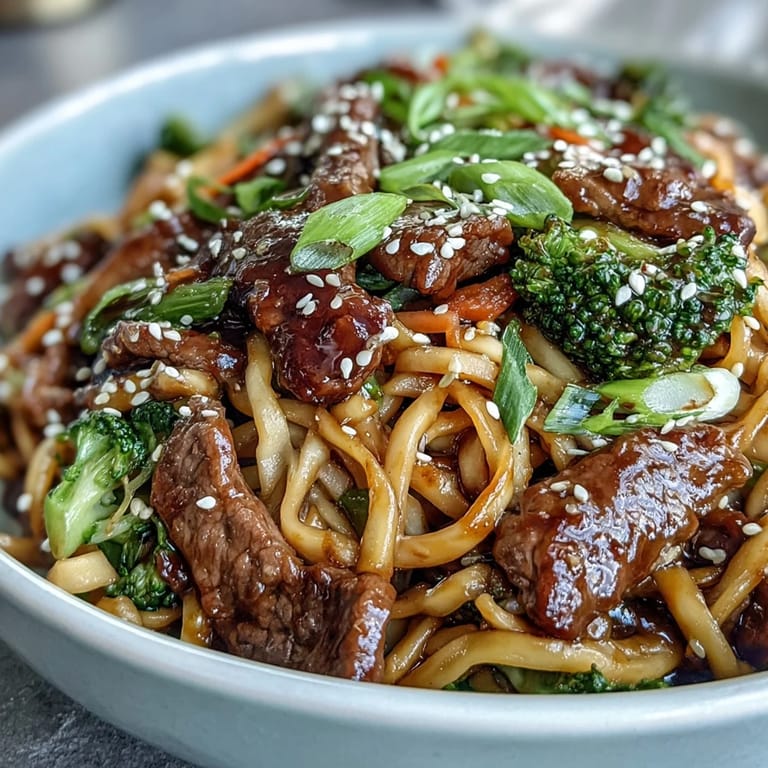
Pin This bowl of noodles has become my weeknight anchor, the dish I turn to when I need something fast, filling, and just a little bit special. I hope it finds a place in your kitchen too.
Recipe FAQs
- → How do I slice flank steak properly?
Slice the flank steak thinly against the grain, which means cutting perpendicular to the muscle fibers. This ensures tender, bite-sized pieces that cook quickly and absorb the flavorful sauce.
- → Can I make this dish spicy?
Absolutely. Stir in sriracha or gochujang (Korean chili paste) to the sauce mixture for a spicy kick. Start with one teaspoon and adjust to your preferred heat level.
- → What other vegetables work well in this dish?
Snap peas, zucchini, shiitake mushrooms, baby corn, or bok choy make excellent additions. Feel free to use whatever crisp vegetables you have on hand for added texture and nutrition.
- → How should I store leftovers?
Store leftovers in an airtight container in the refrigerator for up to 3 days. Reheat gently in a skillet or microwave, adding a splash of water if the noodles seem dry.
- → Can I substitute the flank steak?
Yes. thinly sliced chicken breast, firm tofu, or even shrimp work beautifully as protein alternatives. Adjust cooking times accordingly—chicken may need a few extra minutes, while tofu and shrimp cook faster.
- → Do I need a wok to make this?
A large skillet works perfectly fine if you don't have a wok. The key is maintaining high heat and tossing ingredients frequently to achieve that signature stir-fry texture and flavor.