 Pin
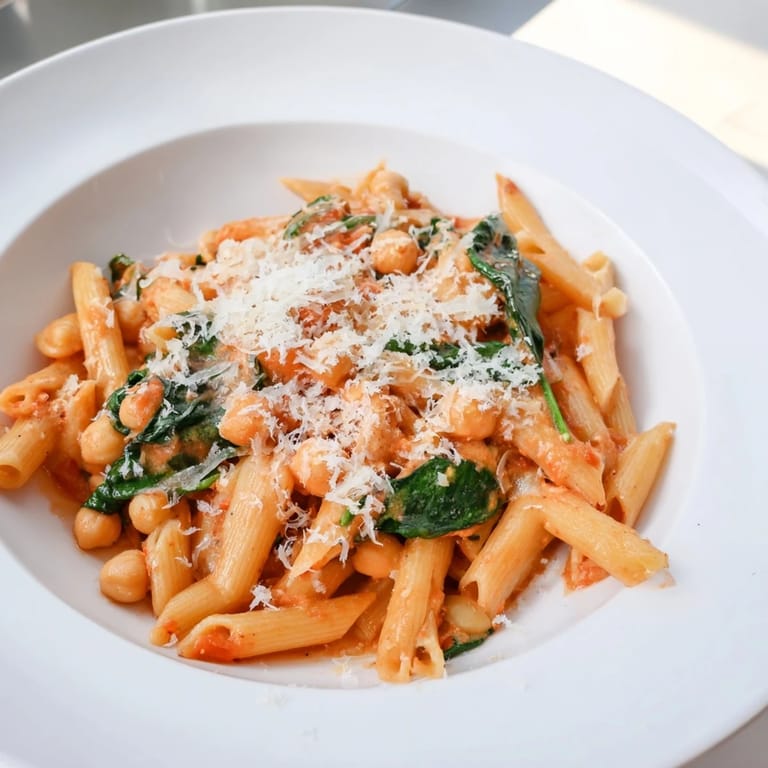
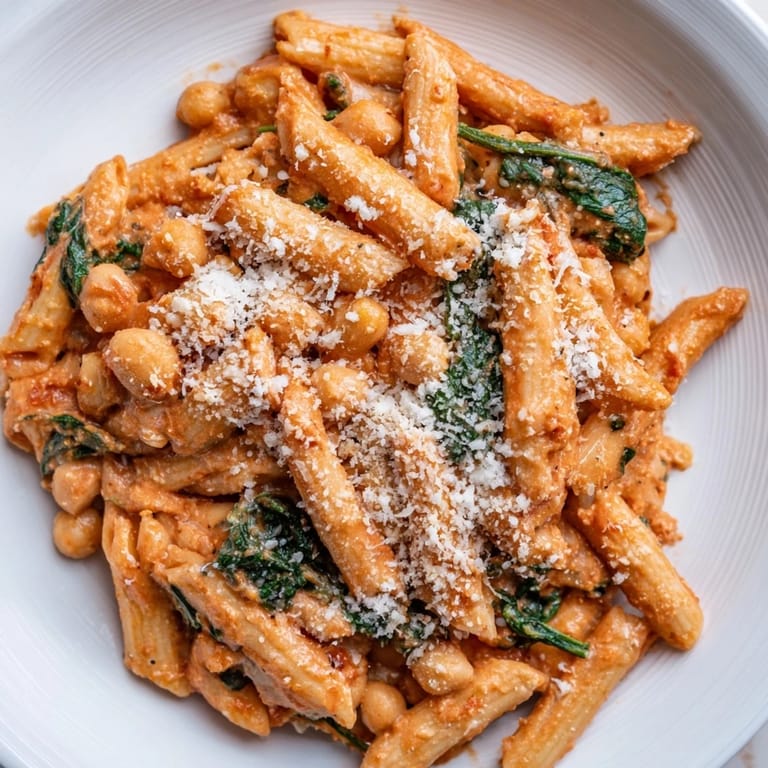
Pin The steam from the pot fogged up my kitchen window one rainy Tuesday, and I stood there stirring chickpeas into tomato cream, wondering why I hadn't thought of this combination sooner. My neighbor had dropped off a bag of spinach from her garden that morning, wilting slightly but still vibrant, and I needed to use it before it turned. I pulled out a can of chickpeas, some pasta, and whatever was left in the fridge. What happened next became one of those accidental weeknight wins that you end up making on repeat.
I made this for my sister the first time she visited after moving across the country, and she was skeptical when I told her the base was chickpeas. She's not a vegetarian and usually needs convincing when it comes to meatless mains. But halfway through her bowl, she looked up and asked for the recipe, which is the highest compliment she gives. We sat at my little kitchen table with our mismatched bowls, catching up and twirling pasta, and it felt like the kind of meal that holds space for conversation.
Ingredients
- Short pasta (penne, rigatoni, or fusilli): The ridges and hollow shapes trap the creamy sauce beautifully, and I've found that anything shorter than a long noodle works better for this kind of chunky, hearty mix.
- Olive oil: Use a good quality one if you have it, since it's the base flavor that everything else builds on, and you'll taste the difference in the final dish.
- Yellow onion: Chop it finely so it melts into the sauce rather than sitting in chunks, creating a sweet, savory foundation that doesn't overpower the garlic.
- Garlic: Fresh is essential here, don't use the jarred stuff, because you want that sharp, fragrant hit right when it meets the hot oil.
- Chickpeas: Drain and rinse them well to get rid of that starchy canned liquid, which can make the sauce taste flat or metallic if left behind.
- Diced tomatoes: I prefer fire roasted if I can find them, as they add a subtle smokiness, but regular canned tomatoes work perfectly fine too.
- Vegetable broth: This loosens the sauce and adds a deeper savory note, and you can use the pasta water later to adjust the consistency further.
- Dried oregano and thyme: These bring that warm, Mediterranean backbone to the dish, and I always crush them between my fingers before adding to wake up the oils.
- Crushed red pepper flakes: Optional, but I like just a pinch for a gentle warmth that doesn't make it spicy, just more alive.
- Heavy cream or plant based cream: This is what makes the sauce luxurious and cling to every piece of pasta, and either version works seamlessly depending on your preference.
- Parmesan cheese: Freshly grated melts into the sauce much better than pre shredded, which often contains anti caking agents that make it grainy.
- Baby spinach: It wilts down to almost nothing, so don't worry if the pile looks huge at first, it'll integrate seamlessly into the sauce within minutes.
- Fresh basil: Torn at the last second and scattered on top, it adds a bright, herbal pop that makes the whole dish feel more intentional and restaurant quality.
Tired of Takeout? 🥡
Get 10 meals you can make faster than delivery arrives. Seriously.
One email. No spam. Unsubscribe anytime.
Instructions
- Get the pasta going:
- Bring a large pot of generously salted water to a rolling boil and cook your pasta until it still has a slight bite in the center. Before draining, scoop out half a cup of that starchy pasta water, it's your secret weapon for a silky sauce later.
- Start the base:
- Heat olive oil in a large skillet over medium heat and add the chopped onion, stirring occasionally until it turns translucent and starts to smell sweet. Toss in the minced garlic and cook just until fragrant, about a minute, being careful not to let it brown or it'll turn bitter.
- Build the chickpea mixture:
- Add the chickpeas, diced tomatoes, vegetable broth, oregano, thyme, and red pepper flakes if using, then season with salt and black pepper. Let it simmer uncovered for about 10 minutes, stirring now and then, until the sauce thickens slightly and the flavors start to meld together.
- Make it creamy:
- Lower the heat and pour in the cream and Parmesan, stirring gently until the cheese melts into the sauce and everything looks smooth and cohesive. This is the moment the dish transforms from rustic to indulgent.
- Wilt the spinach:
- Toss in the baby spinach and stir until it collapses into the sauce, which should only take a couple of minutes. You'll be amazed at how much volume it loses once it hits the heat.
- Bring it all together:
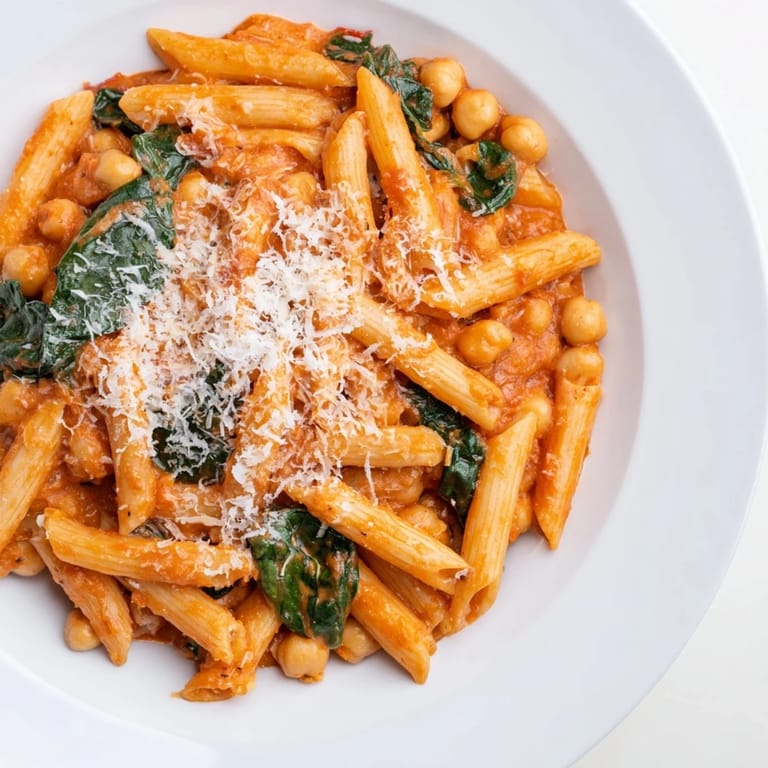
- Add the drained pasta directly into the skillet and toss everything together, adding splashes of that reserved pasta water until the sauce coats every piece beautifully. Serve it hot, topped with torn basil and extra Parmesan.
 Pin
Pin There was a night last winter when I made this after a long, frustrating day at work, and I remember standing at the stove, watching the spinach wilt into the cream, feeling my shoulders finally drop. It wasn't just dinner, it was the pause I needed, the kind of meal that tastes like care even when you're cooking it just for yourself. I ate it straight from the skillet with a glass of cold white wine, and it reminded me that comfort doesn't always have to be complicated.
How to Make It Your Own
This recipe is forgiving and loves improvisation. I've swapped the spinach for kale when that's what I had on hand, and it added a heartier, slightly more robust flavor that held up beautifully against the cream. Sun dried tomatoes or roasted red peppers can be stirred in with the chickpeas for a sweeter, more intense punch of flavor. If you want it vegan, just use plant based cream and nutritional yeast or vegan Parmesan, and honestly, I've done that version plenty of times and no one ever noticed the difference.
What to Serve It With
This pasta is rich enough to stand on its own, but a simple side of garlic bread or a crisp green salad with lemon vinaigrette balances it out nicely. I've also served it alongside roasted vegetables, especially zucchini or bell peppers, which echo the Mediterranean vibe without overwhelming the plate. A chilled Pinot Grigio or Vermentino is my go to pairing, something bright and acidic that cuts through the creaminess and refreshes your palate between bites.
Storing and Reheating
Leftovers keep well in an airtight container in the fridge for up to three days, and I actually think the flavors deepen overnight as everything marinates together. When reheating, add a splash of water or broth to the pan and warm it gently over low heat, stirring frequently so the cream doesn't separate or the pasta doesn't dry out. If you're microwaving it, cover the bowl and heat in short intervals, stirring in between, and add a little liquid to bring the sauce back to life.
- Store in the fridge within two hours of cooking to keep it fresh and safe.
- Reheat only the portion you plan to eat, because the pasta can get mushy if reheated multiple times.
- Don't freeze this dish, because the cream and Parmesan don't thaw well and the texture suffers.
 Pin
Pin This is the kind of dish that makes weeknight cooking feel less like a chore and more like a small act of kindness toward yourself or whoever you're feeding. I hope it becomes one of those recipes you reach for without thinking, the one that feels like a warm hug in a bowl.
Recipe FAQs
- → Can I make this dish vegan?
Yes, simply substitute plant-based cream and vegan Parmesan for their dairy counterparts. The chickpeas provide excellent protein and the creamy texture remains intact with quality plant-based alternatives.
- → What pasta shapes work best?
Short pasta varieties like penne, rigatoni, or fusilli are ideal as they catch and hold the creamy sauce well. Avoid long thin pastas like spaghetti which don't pair as effectively with chunky chickpea and tomato components.
- → How do I adjust the sauce consistency?
Use the reserved pasta water to control thickness. Add it gradually while tossing the pasta with the sauce until you reach your preferred consistency. Start with small amounts as you can always add more.
- → Can I prepare this in advance?
The chickpea sauce can be made ahead and refrigerated for up to 3 days. Cook pasta fresh just before serving, then combine. Add spinach and cream during final warming to preserve texture and flavor.
- → What wine pairs well with this dish?
A crisp Pinot Grigio complements the creamy sauce and tomato elements beautifully. The wine's acidity cuts through the richness while its minerality enhances the Mediterranean flavors.
- → Is this dish gluten-free?
Standard pasta contains gluten, but you can easily substitute gluten-free pasta without affecting the dish's flavor or cooking method. Check all ingredient labels to ensure no hidden gluten sources.