 Pin
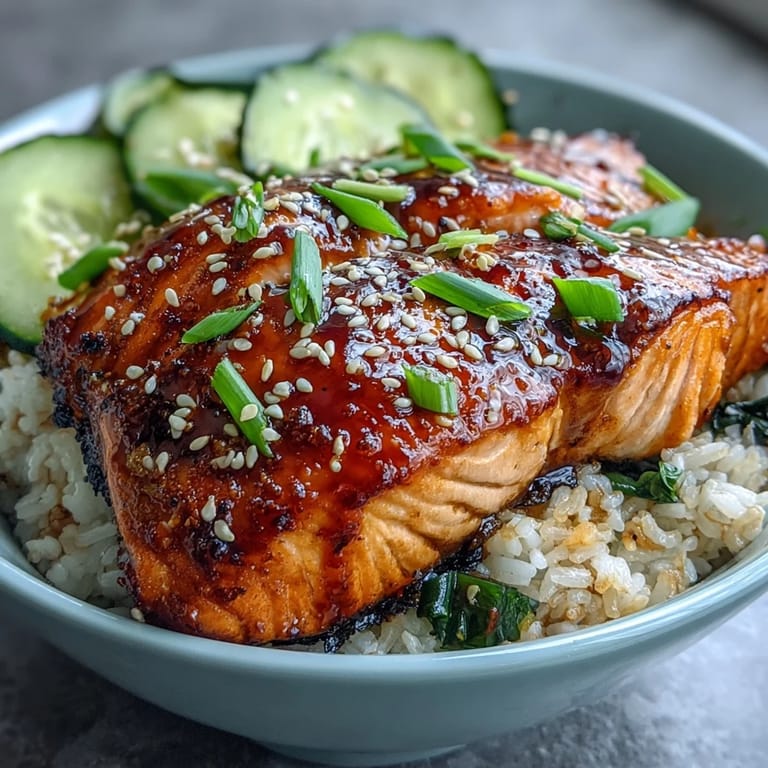
Pin Last summer, I stumbled onto this teriyaki salmon bowl recipe during a rushed weeknight when the air felt thick and I wanted something fresh but filling. The sizzle of salmon hitting the skillet was almost theatrical, and the ginger's perfume made my tiny kitchen seem more alive. I hadn't expected much from dinner, honestly, but the savory balance of the homemade teriyaki sauce kept me pulling up a chair at the counter. Sometimes, a recipe simply arrives at the right moment — and this bowl quickly earned a spot in my dinner rotation. The speed and brightness were a surprise I still look forward to.
A few weeks ago, I made these bowls for my friend Taylor after a spontaneous invitation — just two of us, swapping stories about botched meal prep while the salmon glazed perfectly. We laughed about how the teriyaki sauce splattered and left sugary spots on the stove, but the sweet aroma made up for any mess. That moment reminded me how sharing a meal, even a quick one, connects us just as much as the slow-simmered dinners. Cooking it side by side felt easy: chop, stir, plate, and eat before the rice cooled. Somehow, the energy in the kitchen felt lighter as we assembled our own bowls.
Ingredients
- Salmon fillets: Buy skinless fillets if you can — they cook evenly and soak up more glaze, plus wild salmon brings extra flavor.
- Vegetable oil: A neutral oil helps achieve that crisp seared edge without overpowering the fish.
- Salt and pepper: Simple seasoning goes a long way for highlighting the natural richness of salmon.
- Soy sauce: The base for your teriyaki; low-sodium soy keeps the glaze from getting too salty.
- Mirin: Adds subtle sweetness and sheen; sherry works in a pinch if that's what's in your pantry.
- Honey: This rounds out the glaze with mellow sweetness — just enough to balance the salty kick.
- Rice vinegar: Gently lifts the sauce without making it sharp; don't skip it.
- Fresh ginger: Grate it fine for bold, spicy warmth in the glaze.
- Garlic: Mince it small so it melts straight into the sauce.
- Jasmine rice: Fluffy and fragrant, jasmine rice lends a soft base for every bite.
- Cucumber: Thin slices keep the bowl crisp and cool, offsetting the warm salmon.
- Carrot: Julienne for crunch and color; it's a must for texture balance.
- Avocado: Sliced creamy avocado soothes the punch of ginger and soy.
- Scallions: Fine slices add brightness and a touch of bite at the finish.
- Toasted sesame seeds: Toast yourself for more aroma; they accentuate both flavor and texture.
Tired of Takeout? 🥡
Get 10 meals you can make faster than delivery arrives. Seriously.
One email. No spam. Unsubscribe anytime.
Instructions
- Make the Teriyaki Sauce:
- Whisk soy sauce, mirin, honey, rice vinegar, ginger, and garlic in a mixing bowl until glossy and combined. The aroma will have you anticipating every bite.
- Prepare the Salmon:
- Pat the fillets dry and season with salt and pepper. Heat oil in your skillet to create a shimmer, then gently lay the salmon down.
- Sear the Salmon:
- Let the salmon cook for 2–3 minutes per side, listening for that soft crackle and looking for golden edges. Flip only once so the fish stays tender.
- Glaze with Teriyaki Sauce:
- Pour the teriyaki sauce over the salmon and let it bubble for a minute or two, spooning it over the fillets as it thickens and glazes. The sauce will cling and shine beautifully.
- Prepare the Bowls:
- While the salmon finishes, scoop hot jasmine rice into bowls and arrange cucumber, carrot, and avocado on top. Everything should look vibrant and inviting.
- Add the Salmon and Finish:
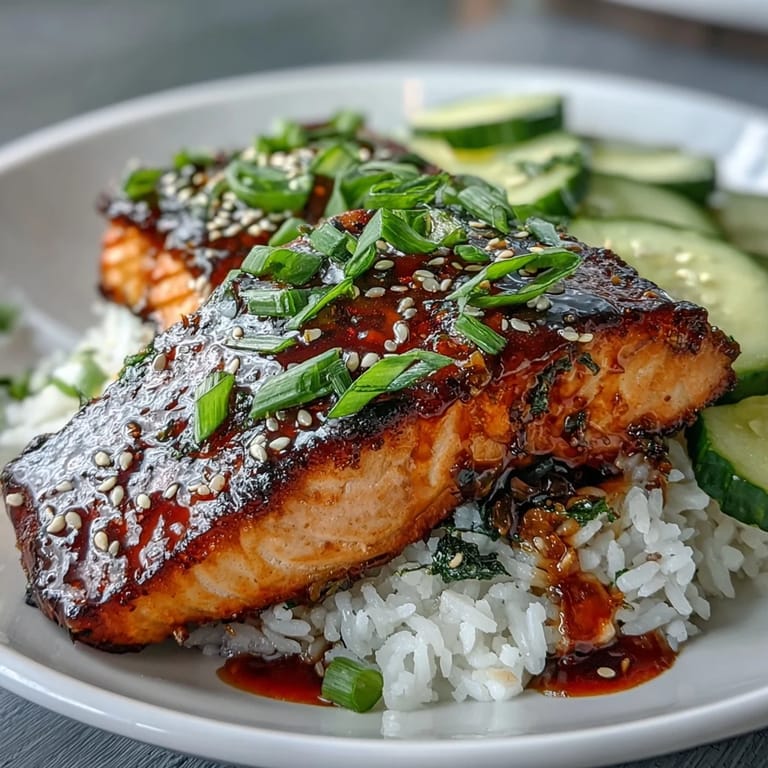
- Slide a glazed salmon fillet onto each bowl, then drizzle with any extra sauce from the skillet for extra flavor. Garnish with scallions and sesame seeds before serving.
 Pin
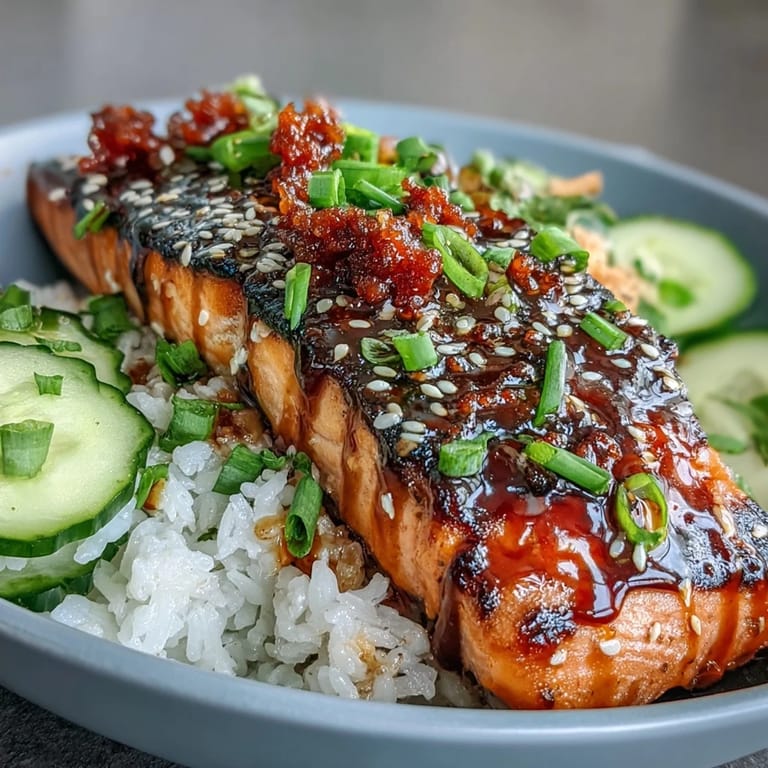
Pin The first time my little niece tried this, she danced around the kitchen, asking if salmon could taste this good every day. It was the look of surprise when she bit in: sweet, sticky, and warm, layered with cool cucumber and creamy avocado. That meal felt more like a celebration than a weekday dinner. Now, every time I make these bowls, it feels just a bit more special for all of us gathered. Sharing something so simple is sometimes all it takes to mark a moment.
How to Get the Perfect Glaze
Letting the sauce bubble and thicken in the pan—without rushing—creates that rich, sticky coating on the salmon. Keep the heat just right, and spoon the sauce as it glazes to get everything evenly covered. Overheating will scorch the sugars, so watch for bubbles, not burns. Stirring keeps the ginger and garlic from clumping, which means a smoother finish in every bite. It rarely turns out the same twice, but that's part of the fun.
Choosing Your Veggies Wisely
I noticed early on that mixing textures in the bowl makes every forkful interesting. Cucumbers and carrots bring crispness, while avocado lends creamy richness—don't skimp on freshness. Sometimes I add edamame for a protein boost or toss in radish slices for extra bite. If you prep all the veggies before starting the salmon, assembly feels effortless. Swapping in whatever's at hand keeps this recipe endlessly adaptable.
Little Tweaks That Make It Yours
A splash of lime juice or some pickled ginger can totally change the vibe, making it tangier or sharper. I've tried brown rice and quinoa on busy days, and both bring new textures but keep that comforting foundation. If you want more heat, a scatter of chili flakes is always welcome. The best bowls are built with improvisation.
- Let the salmon rest for a minute before cutting in so it stays juicy.
- Switch up the veggies depending on what's freshest or in season.
- Never skip the sesame seeds—it's the finishing touch.
 Pin
Pin Whether cooking solo or for company, assembling these bowls always feels rewarding. Enjoy every bite, and let the kitchen be your playground.
Recipe FAQs
- → Can I substitute salmon with another fish?
Yes, you can use trout or cod fillets for similar results. Adjust cooking time based on thickness.
- → How do I make the teriyaki sauce less sweet?
Reduce the honey or replace it with a less sweet alternative like maple syrup or omit entirely.
- → Is this bowl suitable for gluten-free diets?
For gluten-free needs, swap soy sauce with tamari and ensure all other condiments are wheat-free.
- → What vegetables pair well with the bowl?
Cucumber, carrot, avocado, scallions, and edamame complement the flavors. Add pickled ginger for extra zest.
- → Can I use brown rice or quinoa instead of jasmine rice?
Absolutely, brown rice or quinoa can be used for a whole-grain variation with added nutrition and texture.