 Pin
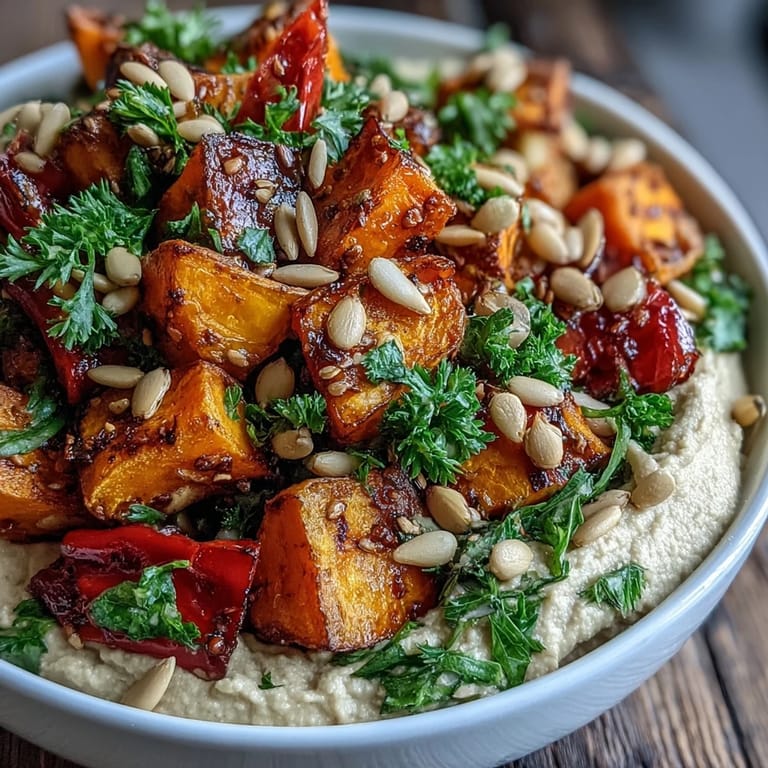
Pin There's a particular moment in late November when I stopped fighting the season and started celebrating it instead. That's when this salad came to life—not from a recipe book, but from standing in front of my vegetable drawer with golden squash and sweet potatoes staring back at me, wondering what could possibly taste better than roasted vegetables wrapped in creamy hummus. My kitchen smelled like caramelizing sweetness for hours afterward, and I realized I'd accidentally created something that felt both comforting and alive at once.
I made this for a dinner party once when someone mentioned being tired of heavy winter food, and watching them go back for seconds told me everything I needed to know. The toasted seeds were the unexpected star that night—my friend kept asking what that crunch was, and I loved having something to credit besides "just good ingredients."
Ingredients
- Butternut squash (1 medium, about 700 g): Its natural sugars caramelize beautifully when roasted, creating those golden edges that taste almost nutty—don't skip the high heat.
- Sweet potatoes (2 medium, about 500 g): They cook faster than you'd think and add a creamy texture without being heavy once roasted.
- Red bell peppers (2, seeded and sliced): These stay tender but hold their shape, and their slight sweetness complements the earthiness of the squash perfectly.
- Olive oil (2 tablespoons for roasting plus 3 for hummus): Good quality matters here because it's doing the flavor work in the hummus—taste the difference immediately.
- Butter beans (1 can, 400 g, drained and rinsed): They blend into something silkier than chickpeas and take on flavor without being pushy about it.
- Tahini (2 tablespoons): This is what transforms plain beans into something that tastes like you spent hours on it, but don't add too much or it becomes bitter.
- Lemon juice (2 tablespoons): Fresh lemon is non-negotiable—bottled will taste thin by comparison and won't brighten the hummus the same way.
- Garlic (1 clove, crushed): One clove is enough; raw garlic becomes intense in hummus and can overpower everything if you're not careful.
- Ground cumin (1/2 teaspoon): It whispers warmth rather than announces itself, tying all the roasted vegetables together.
- Mixed seeds (3 tablespoons): Toasting these yourself takes two minutes and transforms them from forgettable to the thing people ask about.
- Fresh parsley (2 tablespoons, chopped): A bright, last-minute addition that cuts through richness and makes the plate look like you tried.
Tired of Takeout? 🥡
Get 10 meals you can make faster than delivery arrives. Seriously.
One email. No spam. Unsubscribe anytime.
Instructions
- Get your oven ready and prep your vegetables:
- Preheat to 200°C (400°F) while you peel and cube your squash and sweet potatoes—aim for roughly the same size pieces so they cook evenly. Slice those bell peppers into thick strips rather than tiny bits; they'll caramelize better and stay more interesting in texture.
- Roast the vegetables until they're golden and surrendered:
- Toss everything with olive oil, salt, and pepper on a baking tray, then slide it in for 30-35 minutes, stirring halfway through. You'll know it's ready when the edges are dark and caramelized and a fork pierces the squash without resistance.
- Build the hummus while vegetables roast:
- Add butter beans, tahini, lemon juice, crushed garlic, olive oil, cumin, salt, and pepper to a food processor and blend until it's completely smooth and creamy. Start with 2 tablespoons of water and add more gradually until it reaches the consistency you want—thick enough to hold a spoon but loose enough to spread easily.
- Toast the seeds for that crucial crunch:
- In a dry skillet over medium heat, watch the seeds carefully for 2-3 minutes until they smell fragrant and turn light golden. Remove them immediately to avoid them tasting burnt.
- Assemble with intention:
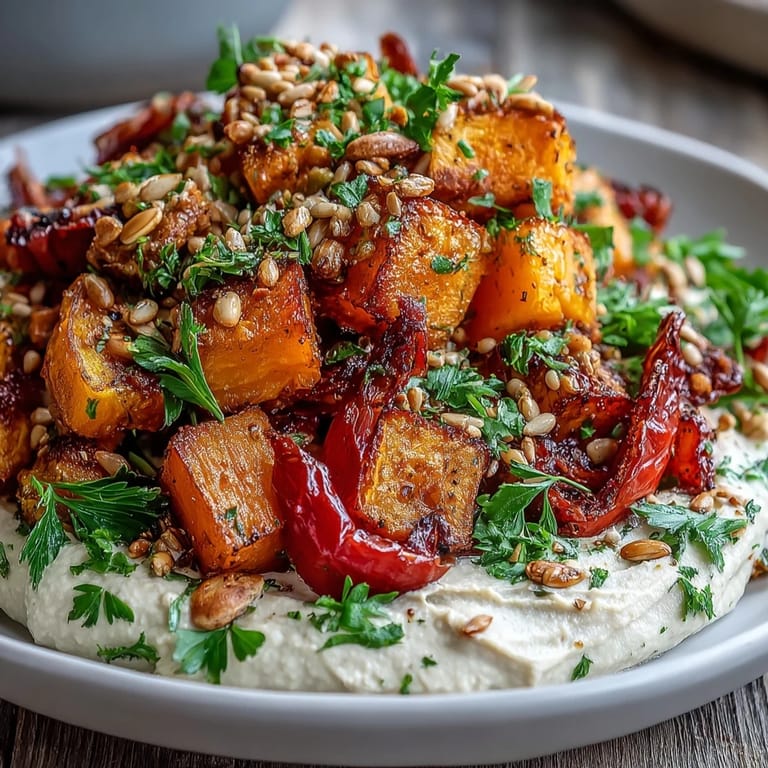
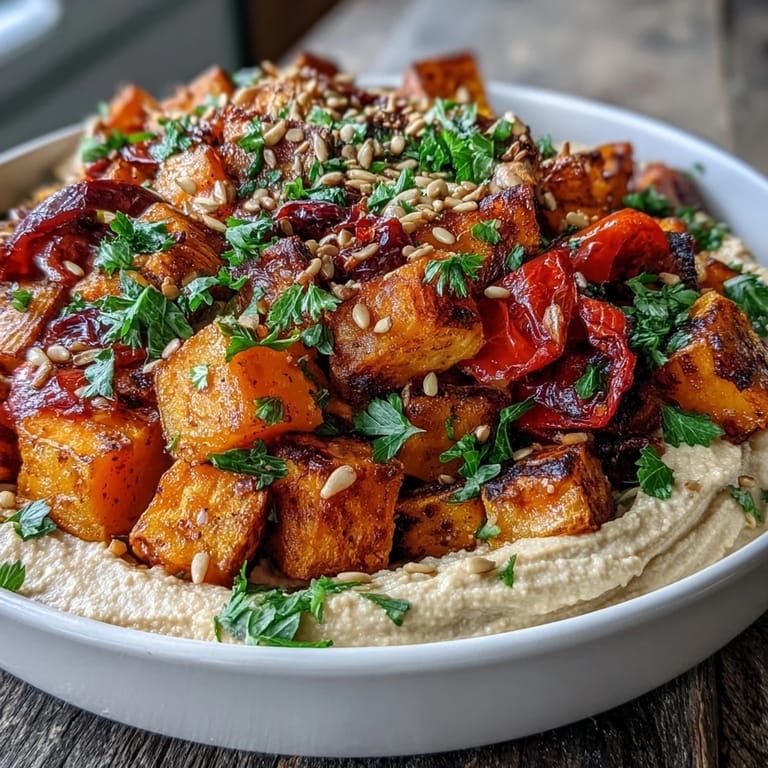
- Spread a generous layer of hummus on each plate as your base, arrange the warm roasted vegetables on top, then scatter the toasted seeds, fresh parsley, and a pinch of smoked paprika across everything. The warmth of the vegetables will soften the hummus slightly, creating something unified instead of layered.
 Pin
Pin There's something almost meditative about watching vegetables transform in the oven—the way they shrink and concentrate and become something better than they started as. That's what this salad taught me about cooking in general: sometimes the best things happen when you give good ingredients heat, time, and permission to become something more.
Why Roasted Vegetables Belong on More Winter Tables
Roasting isn't just a cooking technique; it's an act of transformation that makes vegetables taste like a gift rather than an obligation. When squash and sweet potatoes hit heat, their natural sugars concentrate into something almost caramel-like, and suddenly you understand why people get excited about vegetables at all. This salad proves that winter food doesn't need to be starchy or heavy to feel satisfying.
The Secret Power of Butter Bean Hummus
Butter beans create a hummus that tastes luxurious without the processed taste of store-bought versions, and they're somehow creamier than chickpeas while being gentler on digestion. The tahini deepens the flavor without overwhelming it, and the cumin adds a whisper of warmth that makes the whole plate feel intentional. Once you taste this homemade version, you'll understand why people spend extra effort on hummus instead of just opening a tub.
Making It Your Own and Serving Suggestions
This salad is flexible enough to work with whatever vegetables call to you, and it tastes even better the next day when flavors have settled and mingled. It stands alone as a main course, but it also plays well with crusty bread or pita if you want something more substantial. The hummus keeps for four days in the fridge, and the roasted vegetables can be prepared the day before, making this a smart choice for meal planning without feeling like you're eating leftovers.
- Try roasting red onions or carrots alongside the squash for extra flavor depth and natural sweetness.
- Serve with a crisp white wine like Sauvignon Blanc or a light red like Pinot Noir to complement the earthy sweetness.
- Swap butter beans for chickpeas if you prefer, or add crumbled feta on top for richness.
 Pin
Pin This salad taught me that winter food can be vibrant and exciting without requiring anything exotic or complicated. Make it once and you'll find yourself reaching for it again and again, especially when you need something that feels nourishing without being fussy.
Recipe FAQs
- → Can I prepare this in advance?
Yes, roast vegetables and hummus can be made up to 2 days ahead. Store separately in airtight containers and reheat vegetables before serving. Toast seeds fresh for best texture.
- → What can I use instead of butter beans?
Chickpeas work perfectly as a substitute and will create a more traditional hummus flavor. Cannellini or white navy beans also offer excellent creamy results.
- → Is this suitable for meal prep?
Absolutely. Portion components into separate containers and keep refrigerated for 4-5 days. The flavors actually develop and improve after a day or two.
- → How do I get the vegetables perfectly roasted?
Cut vegetables into uniform 2cm cubes for even cooking. Don't overcrowd the baking tray, and flip halfway through cooking. They're done when edges are golden and tender throughout.
- → Can I add other roasted vegetables?
Certainly. Red onions, carrots, parsnips, or Brussels sprouts would all complement the existing flavors. Just adjust roasting times based on vegetable density.
- → What proteins pair well with this bowl?
Grilled chicken, roasted chickpeas, halloumi, or pan-seared tofu work beautifully. The existing hummus provides 9g protein per serving, making it substantial on its own.