 Pin
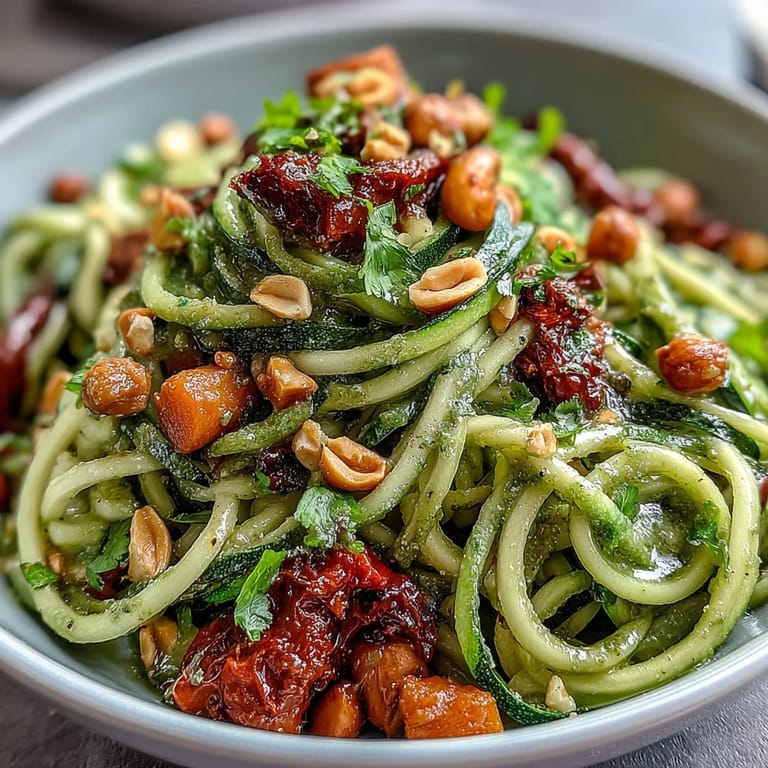
Pin My spiralizer sat in a cabinet for months before I finally pulled it out on a Tuesday night when I had nothing but zucchini, good intentions, and zero energy for actual cooking. The moment those green ribbons hit the hot pan and started to soften, something clicked—this was going to be lighter than pasta but still deeply satisfying, especially when I drizzled that peanut sauce over everything. Now it's the dish I make when I want to feel good about dinner without any fuss or guilt.
I made this for my sister when she was going through a phase of cutting back on refined carbs, and watching her eyes light up when she tasted it was worth every spiral. She kept asking if it was actually just zucchini, genuinely surprised that something so quick could taste that intentional and alive.
Ingredients
- Zucchini (4 medium, spiralized): The star that pretends to be pasta; spiralize them just before cooking so they stay crisp and don't weep all over your pan.
- Red bell pepper (1 large, thinly sliced): Brings sweetness and that satisfying crunch that keeps things interesting texture-wise.
- Carrot (1 large, julienned): Add natural sweetness and a little earthiness that balances the tang of the sauce.
- Snap peas (1 cup, halved): They stay snappy even with heat, and their delicate sweetness plays beautifully against the peanut richness.
- Green onions (2, thinly sliced): Save half for garnish; they brighten everything at the end.
- Fresh cilantro (2 tablespoons, optional): If you're a cilantro person, use it generously; if not, skip it without guilt.
- Natural peanut butter (1/3 cup): The creamy backbone of everything; make sure it's actually smooth peanut butter and not the separated kind.
- Low-sodium soy sauce or tamari (2 tablespoons): Use tamari if you need this gluten-free; it rounds out the sauce without overpowering.
- Rice vinegar (1 tablespoon): A gentle acid that keeps the sauce bright instead of heavy.
- Lime juice (1 tablespoon, about half a lime): Fresh lime is essential here; bottled won't give you the same spark.
- Maple syrup or honey (1 tablespoon): Just enough sweetness to balance the savory and acid; don't skip this small amount.
- Toasted sesame oil (2 teaspoons): A little goes a long way; it's what makes this taste intentional and not just like peanut butter on vegetables.
- Garlic and ginger (2 cloves garlic, minced; 1 teaspoon fresh ginger, grated): These two are the difference between forgettable and memorable; mince them small so they distribute evenly.
- Warm water (2 to 4 tablespoons): Use this to get the sauce to a pourable consistency; every peanut butter brand is different.
- Crushed red pepper flakes (1/2 teaspoon, optional): Add if you like heat, but this dish is delicious without it.
- Roasted peanuts (2 tablespoons, chopped) and extra cilantro or green onions for garnish: These are the final touch that makes it feel intentional rather than just thrown together.
Tired of Takeout? 🥡
Get 10 meals you can make faster than delivery arrives. Seriously.
One email. No spam. Unsubscribe anytime.
Instructions
- Prep everything first:
- Spiralize your zucchini and carrot, slice the bell pepper and snap peas, and mince your garlic and ginger all before you turn on any heat. This matters more than you'd think because once the pan gets hot, everything moves fast.
- Make the sauce while you breathe:
- In a medium bowl, whisk together the peanut butter, soy sauce, rice vinegar, lime juice, maple syrup, sesame oil, garlic, and ginger. Start with 2 tablespoons of warm water and add more, one tablespoon at a time, until it's smooth and flows easily off the whisk. Taste it and adjust; if it's too strong, add a splash more water.
- Heat your pan properly:
- Get a large nonstick skillet or wok hot over medium-high heat, then add just a tiny splash of sesame oil if you want extra flavor. You'll know it's ready when a piece of bell pepper sizzles immediately.
- Cook the sturdy vegetables first:
- Add the bell pepper, carrot, and snap peas to the hot pan and stir-fry for 2 to 3 minutes, keeping them moving so they cook evenly but stay crisp. They should still have a slight resistance when you bite into them, not soft and collapsed.
- Add the zucchini noodles gently:
- Toss in the spiralized zucchini and cook for 2 to 3 minutes, stirring gently and constantly, until they're just heated through and still have a slight firmness. This is where patience matters; overcook them by even a minute and they'll turn to mush and release water everywhere.
- Bring it all together:
- Pour the peanut sauce over everything and toss to coat, then cook for another 1 to 2 minutes, stirring continuously, until the sauce clings to the noodles and vegetables. The whole pan should smell incredible at this point.
- Finish and serve immediately:
- Remove from heat, transfer to a serving bowl or individual plates, and top with chopped roasted peanuts, extra green onions, and cilantro if you're using it. Eat it right away while the zucchini still has texture.
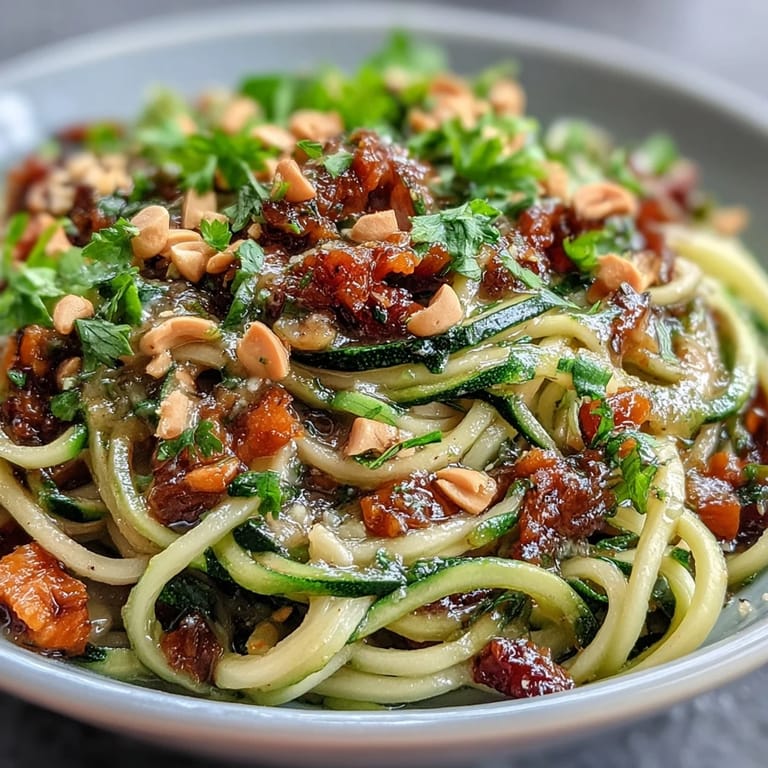 Pin
Pin There's something about watching someone eat this and actually slow down to taste each bite that reminds me why I cook at all. It's quick enough to fit into a real life, but thoughtful enough that it never feels like a shortcut.
Why the Peanut Sauce Is Everything
I've learned that a good peanut sauce is the difference between eating vegetables because you have to and actually craving them. The balance of nutty richness, bright acid, gentle heat, and umami depth is what makes this work. If your sauce tastes flat, it's usually because you need more lime juice or a pinch more garlic; if it tastes too strong, water is your friend. The toasted sesame oil is the secret ingredient that nobody talks about, but once you add it, you can taste exactly why it matters.
Building Your Own Variations
The beauty of this dish is that it works as a template for however you want to cook. Swap in any crisp vegetables you have—mushrooms, broccoli, cabbage, cucumber—and the peanut sauce will make them all delicious. For protein, grilled chicken, pan-seared tofu, or cooked shrimp all make sense here without changing the character of the dish. You can also play with the sauce base by using almond or sunflower seed butter if peanuts aren't your thing, and coconut aminos instead of soy sauce if you're avoiding soy.
Storage and Serving Smart
Make this fresh and eat it fresh; the zucchini noodles don't have a long shelf life once they're dressed. If you want to meal prep, spiralize your zucchini ahead of time and store it in a paper towel-lined container in the fridge, then make the sauce separately and store it in a jar. When you're ready to eat, simply cook the noodles with the other vegetables and sauce it all together. This way you get the speed and freshness of the dish without losing quality.
- Spiralized zucchini keeps for about 2 days if stored properly and not dressed.
- The peanut sauce keeps for up to 5 days in a sealed jar in the refrigerator.
- Reheat gently and serve warm, but this dish is honestly best made to order.
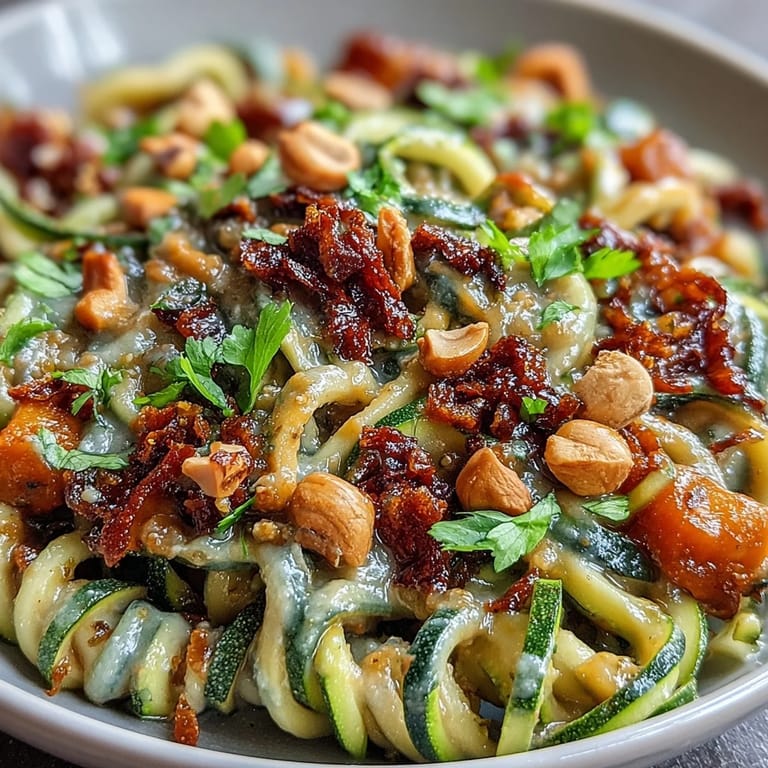 Pin
Pin This is the kind of dinner that feels like taking care of yourself while still tasting like something you actually want to eat. Make it when you need something fast, and watch it become something you make all the time.
Recipe FAQs
- → How do I prevent zucchini noodles from becoming soggy?
Cook zucchini noodles briefly over medium-high heat, about 2-3 minutes, stirring gently to keep them firm and prevent excess moisture release.
- → Can I substitute peanut butter in the sauce?
Yes, almond or cashew butter can be used to create a similar creamy texture with a different nutty flavor.
- → What cooking tools are recommended for this dish?
A spiralizer or julienne peeler for vegetables, and a large skillet or wok for stir-frying are ideal tools for preparation.
- → Is this dish suitable for gluten-free diets?
Use tamari instead of soy sauce to keep the dish gluten-free while maintaining savory depth in the sauce.
- → How can I add protein to this dish?
Top with grilled tofu, chicken, or shrimp to boost protein content without altering the existing flavors.